Corporate videos are now a common way for organisations to communicate with staff, clients, and stakeholders.
If you have been asked to appear in one, you may be interviewed about your work or filmed carrying out everyday activities.
If you have not been filmed before, ask the production team what will happen and what you need to prepare. Knowing the topics, schedule and setting can help you feel more comfortable.
This guide outlines what to expect and how to prepare so you can feel comfortable, confident, and focused on the message.
Get clear on what’s required
Before filming, the video production company should explain the purpose of the video, who it is for, and how it will be used.
They should also outline what will be expected of you on the day, whether that involves being interviewed, appearing in supporting footage, or both.
Once you understand the context, it becomes much easier to participate in a way that supports the overall message.
You should also be given practical details such as timing, location, what to wear, and any specific content areas that may be covered.
If anything is unclear, it’s completely appropriate to ask questions in advance so you feel prepared.
What to wear
In most cases, you should wear the type of clothing you would normally wear for your role.
Choose items that are clean, well-fitted, and in good condition. Clothes should feel comfortable and familiar so they don’t become a distraction on the day.
If you work in an office environment, neutral and contemporary clothing usually works best. Avoid loud patterns, novelty items, or anything that draws attention away from what you’re saying.
If you wear a uniform, make sure it is clean, neat, and worn correctly. You are representing the organisation’s brand.
Basic grooming also makes a difference. Simple things like tidy hair, clean hands, and appropriate presentation help ensure the focus stays on the message.
We go into more detail about what to wear in front of camera in this post.
If you’re being interviewed on camera
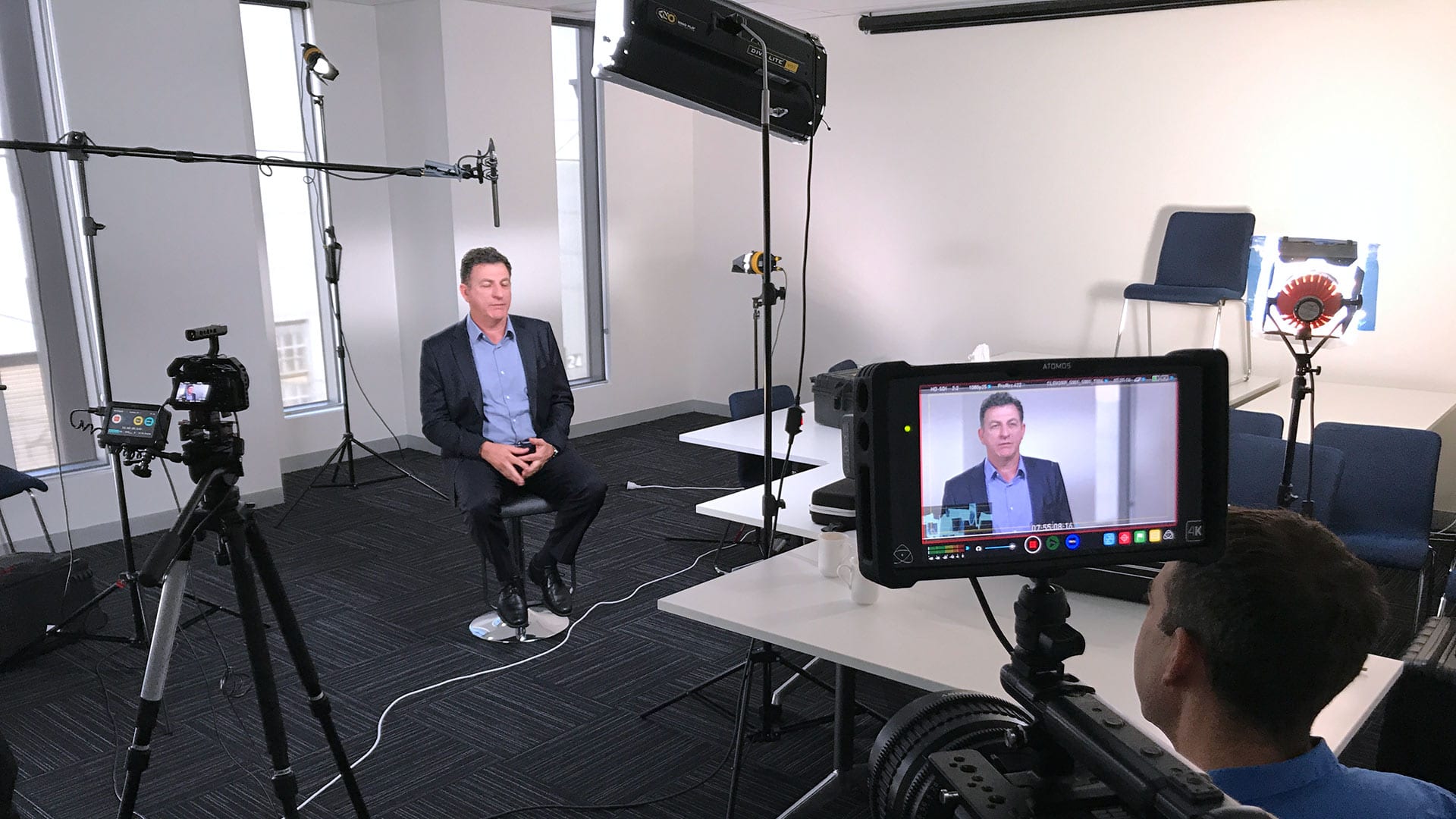
It’s the production team’s job to help you look and sound good on camera. This is something we do every day, and we’ll guide you through the process.
Most interviews are conversational, so you usually do not need to memorise a script. Review the topics beforehand and check any names, figures or technical details you may need. Brief notes can help you prepare; discuss with the producer if you need to refer to them during filming.
The aim is to capture clear, natural answers. Address one point at a time, with enough detail to make it useful. The interviewer can ask a follow-up question or help you give a shorter version. Remember that the final video is edited. You don’t need to get everything perfect in one take.
Learn more with these tips for being interviewed on camera.
Filming supporting footage
In addition to interviews, most corporate videos include supporting footage, often called cutaways or b-roll.
This usually involves filming you and your colleagues going about normal work activities. This lets viewers see the work you describe in the interview.
If something feels artificial or doesn’t reflect how you normally work, it’s important to say so. The footage should accurately reflect your work.
Following workplace procedures
All workplace safety requirements and procedures should be followed during filming.
This includes correct clothing, protective equipment, and terminology. If something isn’t done correctly, the footage often can’t be used.
The production team will work with you to make sure filming complies with your workplace standards.
On the day
The more relaxed and comfortable you feel, the better you’ll come across on camera.
Our role is to support you through the process and create an environment where you can focus on doing your job.
When you see the finished video, the goal is for you to feel comfortable with how you’re presented and confident that the message has been communicated clearly.
Planning a corporate video project? Learn more about our Corporate Video Production Melbourne service for examples and an explanation of how we plan and film these projects.
Appearing in a Corporate Video – Frequently Asked Questions
Do I need to prepare a script before being interviewed?
Usually not. Review the topics and check any facts you may need, but avoid memorising every answer. Brief notes can help you prepare. If you need to refer to figures or approved wording during filming, discuss that with the producer beforehand.
What should I wear for a corporate video shoot?
Wear what you would normally wear for your role, but choose clothing that is clean, well-fitted, and in good condition. Neutral and contemporary clothing usually works best, and uniforms should be worn correctly and presented neatly.
How long will the filming take?
It depends on the size of the project and how many people are involved. Most individual interviews take around fifteen to thirty minutes, with additional time for lighting, audio, and filming supporting footage.
What if I’m nervous on camera?
That’s completely normal. The production team will guide you through the process, help you relax, and keep the interview conversational. The video is edited, so you do not need to deliver everything perfectly in one take.
What is b-roll or supporting footage?
B-roll is extra footage of you and your team doing normal work activities. It helps illustrate what you are talking about and adds context to the interview.
Do we need to follow workplace safety procedures during filming?
Yes. All safety requirements and standard procedures should be followed on camera, including protective equipment and correct handling. If something is not done correctly, the footage often cannot be used.
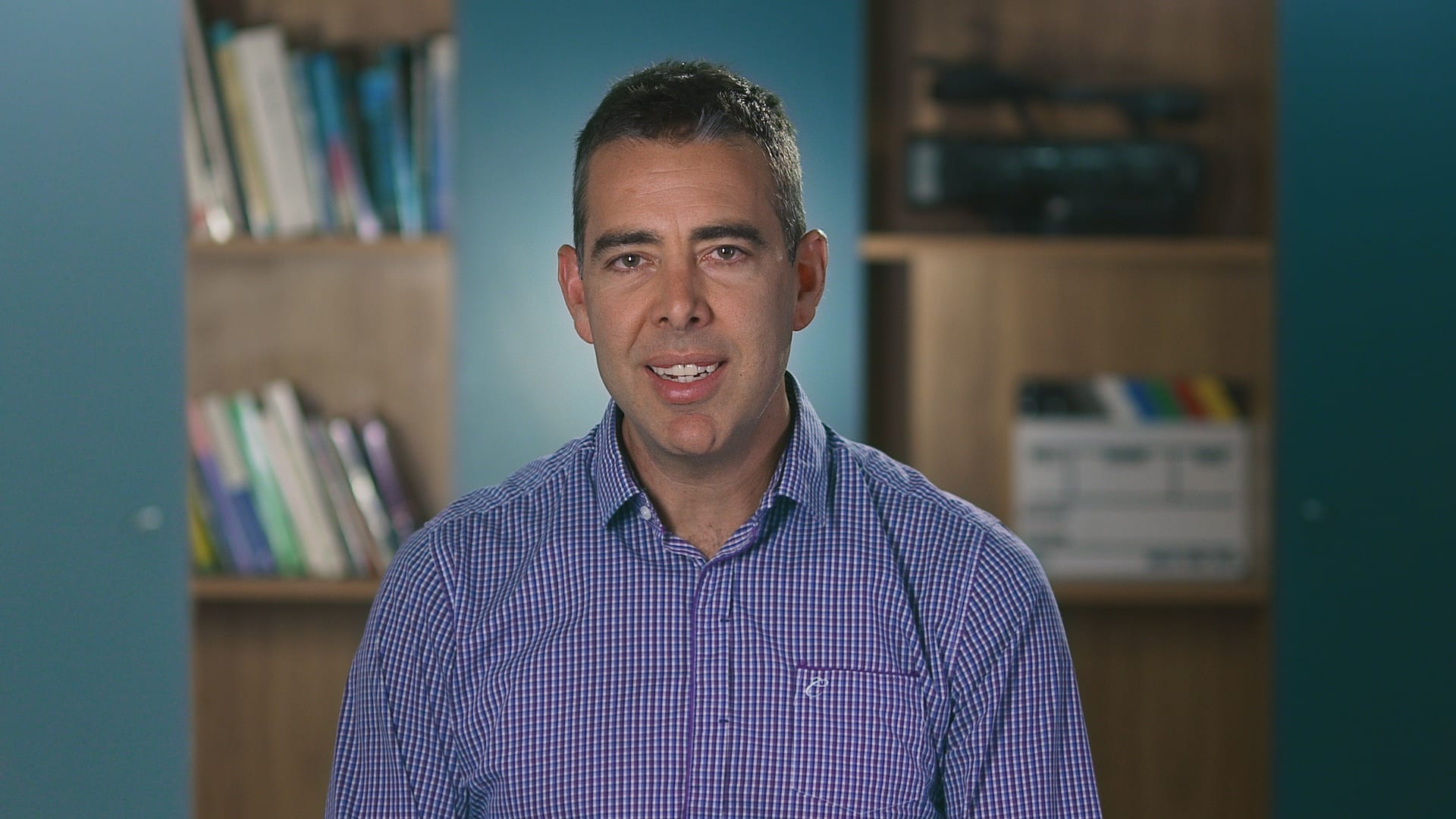
Ryan Spanger is the founder and managing director of Dream Engine, a Melbourne video production company established in 2002. Over the past two decades, he’s produced hundreds of videos for businesses, government departments, universities and healthcare organisations across Australia. Ryan specialises in helping organisations explain complex ideas through clear, engaging video content, with particular experience in corporate communications, training and education.