Training videos play an important role in helping organisations onboard new employees, standardise procedures and share knowledge consistently across their workforce. When they’re planned well, they save time, reduce errors and give people the confidence to perform their jobs correctly.
Unfortunately, we’ve also seen many training videos that fall short of those goals. They try to cover too much in a single sitting, become outdated within a year, or rely so heavily on presentations and written information that viewers disengage long before the important messages are delivered.
After more than 20 years producing training videos for healthcare organisations, manufacturers, education providers, software companies and corporate teams, we’ve noticed the same patterns appearing again and again. Successful projects rarely depend on expensive cameras or elaborate production techniques. More often, they’re the result of good planning, clear communication and a genuine understanding of how people learn.
The observations below are based on hundreds of training video projects we’ve delivered for organisations across Australia.
Keep Training Videos Focused
One of the biggest mistakes we see is trying to fit an entire training program into a single video.
It often seems like the efficient option. Record everything once, upload it and let staff work through the material. In reality, lengthy training videos are difficult to navigate and much harder for people to absorb. Employees rarely need every piece of information at the same time. They’re usually looking for guidance on one task, one procedure or one specific question.
For a communications training program we produced for the College of Intensive Care Medicine, we divided the content into individual modules covering topics such as delivering difficult news, shared decision-making and cross-cultural communication. Rather than asking participants to sit through one long presentation, they could complete each topic independently and return to individual modules whenever they needed a refresher.
Breaking a program into shorter, self-contained videos also makes future updates much easier. If one procedure changes, you only need to update the relevant module rather than rebuilding the entire course.
People Watch Training Videos Differently
People don’t watch training videos the way they watch marketing videos or documentaries.
In most cases, they’re trying to learn a process, complete mandatory training or solve a problem so they can get back to work. They appreciate content that gets to the point quickly, explains things clearly and makes it easy to find the information they’re looking for.
This changes the way training videos should be structured. Long introductions, repeated information and unnecessary detail often work against the learning experience. Every section should have a clear purpose, and every minute should help the viewer understand or perform the task more confidently.
When organisations respect their audience’s time, staff are far more likely to stay engaged and revisit the training when they need it later.
Show the Process, Don’t Just Explain It
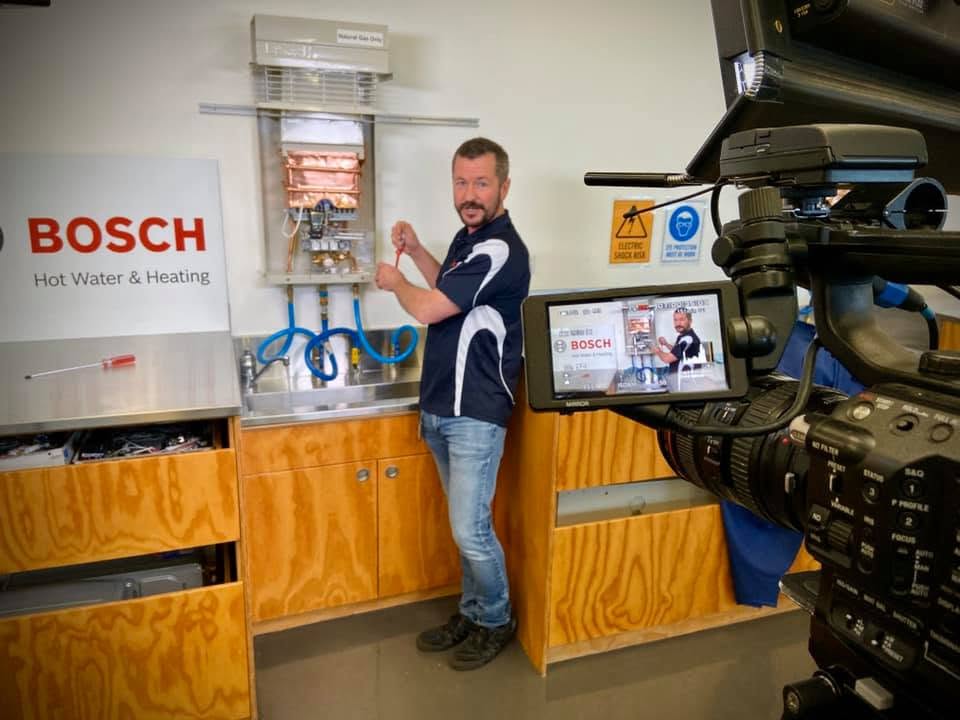
One of video’s greatest strengths is its ability to demonstrate a process rather than simply describe it.
Many training videos rely heavily on PowerPoint slides, documents or presenters speaking directly to camera. While these approaches certainly have their place, they’re usually far more effective when combined with visual demonstrations that show exactly what needs to happen.
This becomes especially important when people are learning to operate equipment, follow workplace procedures or complete tasks involving multiple steps.
For example, we produced a training video for Stryker demonstrating the correct operation of a hospital stretcher used by paramedics and healthcare professionals. Rather than describing each step verbally, viewers could see the process unfold exactly as it should be performed, making the instructions much easier to understand and remember.
Whenever a process can be demonstrated visually, we almost always recommend showing it instead of relying solely on written instructions or verbal explanation.
Design Training Videos for Future Updates
Every training video captures a moment in time.
Procedures evolve, software interfaces change, products are updated and regulations are revised. A training video that is completely accurate today may require changes in twelve months’ time.
That’s why we encourage organisations to think beyond the initial production. Before scripting begins, it’s worth asking how likely the content is to change and how those updates will be managed.
We’ve produced training programs that required different versions for different states, departments and operating environments. Building that flexibility into the structure from the beginning made future revisions far simpler and significantly reduced long-term production costs.
Creating a modular training program doesn’t just improve the learning experience. It also provides a far more practical way to maintain the content as the organisation evolves.
Think About Where People Will Watch the Video
How a training video will be used should influence the way it’s produced.
A video shown during a facilitated induction session has different requirements from one that’s accessed months later through an LMS or company intranet. Likewise, content viewed on a desktop computer in an office may need a different pace and structure from training watched on a tablet in a warehouse or on a mobile phone in the field.
These practical considerations affect much more than the technical delivery. They influence video length, chapter structure, graphics, pacing and even the way information is presented.
For onboarding programs, workplace safety training and compliance content, we often recommend dividing information into clearly defined topics so employees can quickly return to the section they need rather than searching through a single lengthy presentation.
Good Training Video Projects Start Long Before Filming
Many people assume the most challenging part of producing a training video is the filming or editing.
In our experience, the biggest challenges usually appear much earlier.
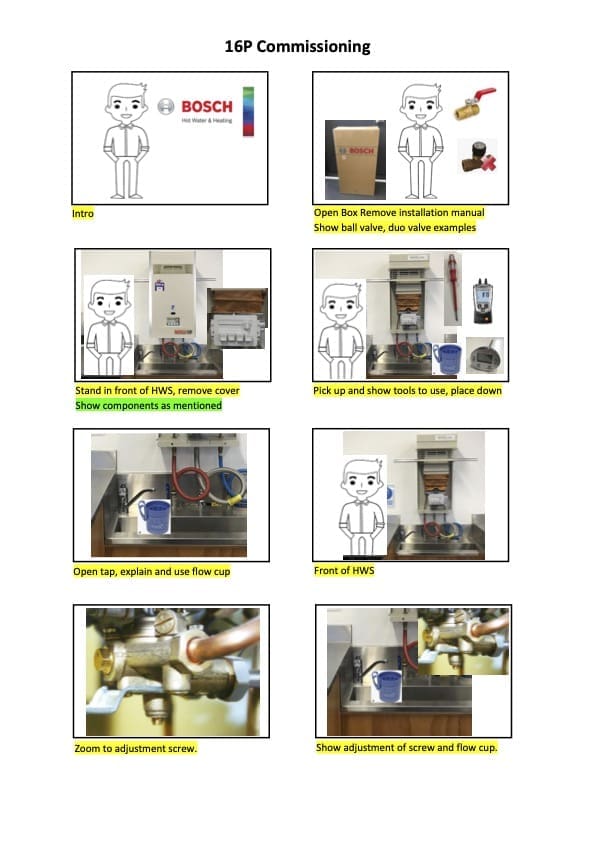
As soon as scripting begins, organisations are often forced to answer questions that have never been fully resolved. Different departments may be following slightly different procedures, stakeholders may disagree about the correct way to perform a task, or important steps may exist only as informal knowledge shared between experienced staff.
We’ve seen projects where a simple request to “film our procedure” uncovered three different versions of that procedure being used across the organisation. Until someone sat down to write the script, nobody had realised the inconsistency existed.
Although these conversations can add time during the planning stage, they almost always improve the finished outcome. Instead of simply documenting an existing process, the organisation has an opportunity to refine it, create greater consistency and produce training that everyone can confidently follow.
For that reason, we generally encourage clients to spend more time on planning than they initially expect. A well-developed script doesn’t just make filming easier. It often improves the underlying process the video is designed to teach.
The Best Subject Matter Expert Isn’t Always the Best Presenter
When organisations begin planning a training video, they often nominate the person with the greatest technical knowledge to appear on camera.
Sometimes that’s absolutely the right choice.
Other times, the person who understands the subject best finds it difficult to explain concepts in a way that’s easy for new employees to understand. Deep expertise doesn’t always translate into clear communication.
One approach we’ve found particularly effective is separating expertise from presentation. The subject matter expert remains heavily involved in planning, script development and technical review, while a confident presenter, facilitator or professional narrator delivers the content on camera.
This allows the information to remain technically accurate while making it more engaging and easier for viewers to absorb.
Ultimately, the objective isn’t to showcase the organisation’s most knowledgeable employee. It’s to help the audience understand the material as quickly and confidently as possible.
Accuracy Matters More Than Creativity
Marketing videos are often judged by how memorable or visually impressive they are. Training videos are judged by something much simpler.
Did people learn the process correctly?
For organisations operating in healthcare, manufacturing, construction, compliance and workplace safety, accuracy is often far more important than creative flair. A beautifully produced video quickly loses its value if procedures are incorrect, terminology is inconsistent or important steps have been omitted.
We’ve worked on projects involving clinical communication, medical equipment, manufacturing processes and workplace procedures where every script was reviewed by subject matter experts before filming began. Those reviews weren’t simply about correcting technical language. They ensured employees could trust the information they were being asked to follow.
Production quality still matters. Clear visuals, professional sound and thoughtful editing all contribute to a better learning experience. But none of those things can compensate for inaccurate information.
Use Animation Where It Adds Clarity
Not every process can be demonstrated effectively with a camera.
Some concepts are hidden from view. Others involve software, internal systems, data flows or technical processes that would be difficult to explain using live-action footage alone.
In these situations, animation can become one of the most effective teaching tools available.
Rather than adding animation simply because it looks polished, we use it to explain concepts that would otherwise be difficult for viewers to visualise. Motion graphics can simplify workflows, illustrate relationships between systems, highlight important information and break complex ideas into manageable steps.
If you’d like to explore this approach further, we’ve written about how animation can improve staff training, and our animation video production services include examples of projects where animation was the clearest way to communicate complex information.
The most effective training videos aren’t built around a particular production technique. They’re built around choosing the format that helps people understand the information most easily.

Common Mistakes We See in Training Video Projects
After producing training videos for organisations across a wide range of industries, a handful of issues appear repeatedly. Most aren’t caused by poor production. They’re usually the result of decisions made before filming even begins.
- Trying to cover an entire training program in one video.
- Explaining processes instead of demonstrating them.
- Creating content that is difficult to update when procedures change.
- Using technical language that new employees don’t understand.
- Assuming the most knowledgeable person is automatically the best presenter.
- Producing the same training resource for audiences with very different needs.
- Rushing the planning and scripting process.
Addressing these issues early usually leads to a better learning experience, a more useful training resource and a video that continues delivering value long after production has finished.
Final Thoughts
After more than 20 years producing training videos, one lesson stands out above all the others.
The camera is rarely the deciding factor.
The organisations that achieve the best results are the ones that invest time defining their processes, planning the content carefully and thinking about how people will actually use the training. Once those foundations are in place, filming and editing become much more straightforward.
The most effective training videos aren’t necessarily the most elaborate or expensive. They’re the ones that explain a process clearly enough that people can watch the video, understand what’s expected of them and confidently apply what they’ve learned in the workplace.
Whether you’re creating onboarding videos, documenting workplace procedures or delivering compliance training, the goal should always be the same: produce a resource that people will genuinely use, not simply complete.
If you’re planning a training project and would like guidance on the best approach, take a look at our training video production service in Melbourne. You’ll find examples of the work we’ve produced for organisations across healthcare, manufacturing, education and the corporate sector, together with information about our production process.
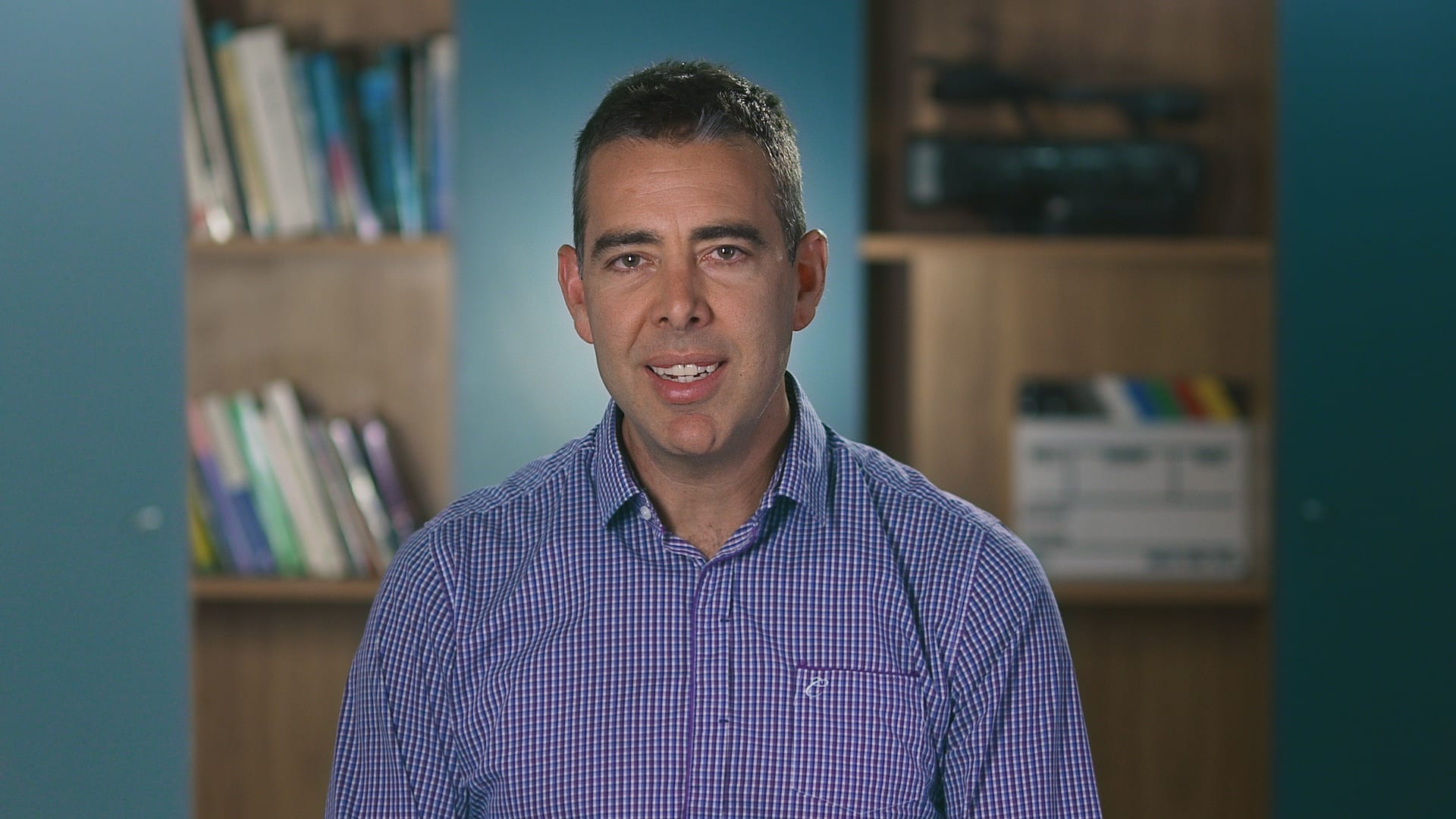
Ryan Spanger is the founder and managing director of Dream Engine, a Melbourne video production company established in 2002. Over the past two decades, he’s produced hundreds of videos for businesses, government departments, universities and healthcare organisations across Australia. Ryan specialises in helping organisations explain complex ideas through clear, engaging video content, with particular experience in corporate communications, training and education.