How to Feel Confident and Prepared for a Video Interview
Appearing on camera can make even the most experienced professionals feel uneasy. A camera has a way of amplifying small doubts and creating pressure where there usually is none. The good news is that most of the nerves disappear once you know what to expect and how to prepare.
These are the same guidelines I share with clients before we film interviews, testimonials and case study videos. Follow them and you will come across as clear, calm and confident.
1. Get clear on what you want to say
Most people feel nervous because they haven’t taken a moment to think about their message. You don’t need a script. You just need a clear idea of the points you want to cover.
Three or four short points are more than enough. Short answers land better on camera because viewers prefer clarity over long explanations. A simple structure works well. What happened. Why it mattered. What changed because of it.
2. Choose simple, classic clothing
Clothing should support your message rather than distract from it. Solid colours film well. Darker tones generally feel more professional. Avoid tight patterns or thin stripes. They can create flicker on camera and draw attention away from your face.
Wear something you feel comfortable in. Confidence comes easily when you feel like yourself.
3. Add more energy than you think you need
A camera softens you slightly. What feels expressive in real life can appear flat once recorded. The solution is to add a little more energy than normal. Slightly bigger smiles. A touch more enthusiasm. A bit more animation in your voice.
It may feel exaggerated to you, but it will look natural to the viewer.
4. Pause before answering
A short pause before you start speaking gives you time to gather your thoughts. It also gives the editor a clean point to begin your answer. You will look more composed and the conversation will flow better.
5. Keep your eyes on the interviewer
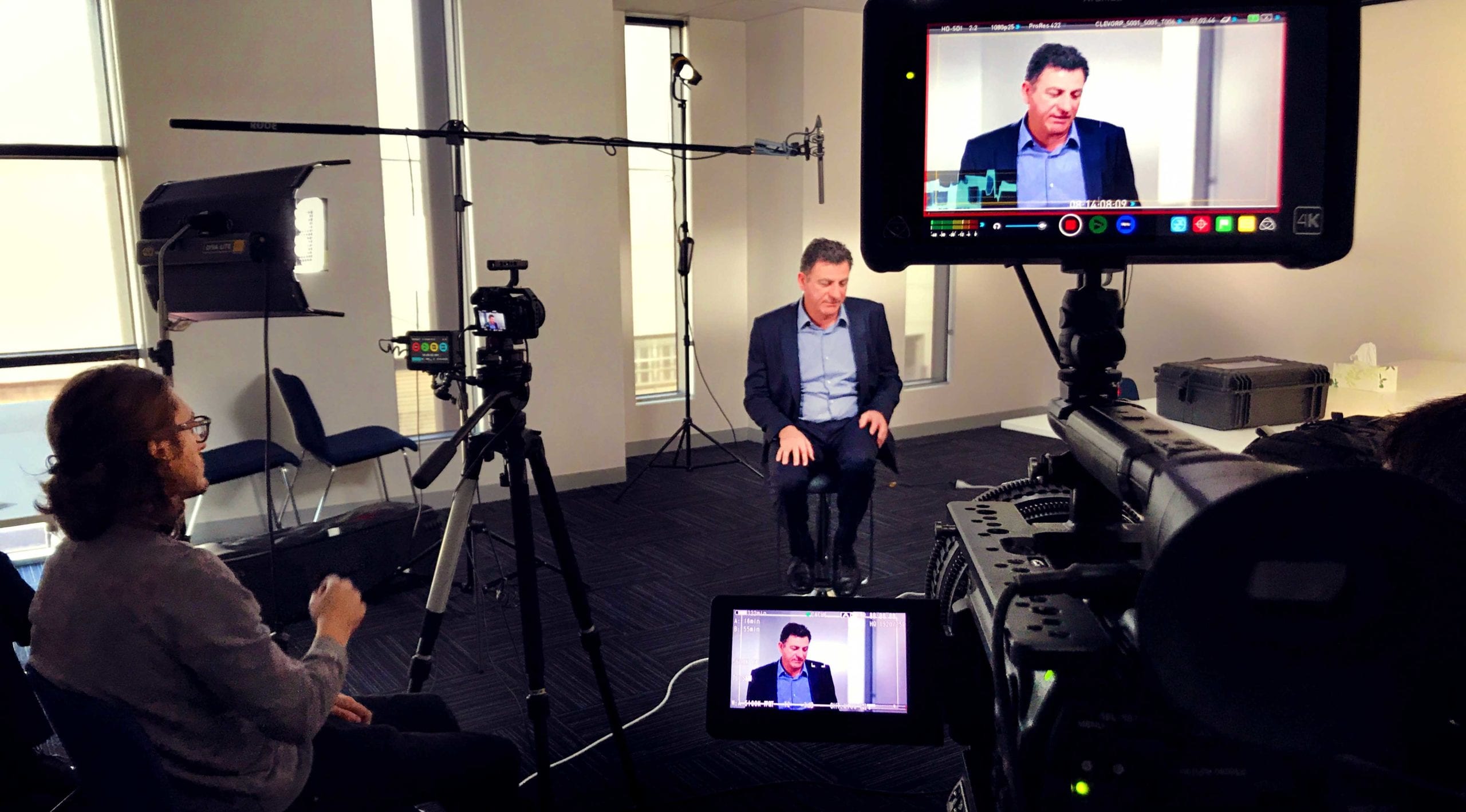
If we are filming a traditional interview, you will look at the interviewer, not the camera. This creates a relaxed, natural conversation. Looking around the room can signal discomfort and break the connection with the viewer. Keeping your attention on the interviewer helps you settle into a rhythm.
6. If you are not happy with your answer, ask to try again
People often assume interviews are a one-take situation. They are not. If you feel like you could answer more clearly or confidently, ask to go again. It is normal and expected. A good production team will encourage this. The goal is to capture the version of your message that feels true to you.
7. Let yourself enjoy it
Most people ease into an interview within a few minutes. Once they get used to the lights and the environment, the nerves fade and the conversation becomes enjoyable. Think of it as a chance to share your perspective, highlight your work and speak directly to the people who will benefit from hearing from you.
The more at ease you are, the more engaging you will be.
If you want help preparing for an on-camera interview
Dream Engine has filmed hundreds of interviews for companies across Melbourne, from short testimonials to detailed case studies and leadership pieces. If you have an upcoming video project and want support with coaching, preparation or production, we can guide you through the entire process.
Learn more about our corporate video production services or see how the video production process works.