In this guide
Being interviewed on camera can feel unfamiliar, even when you know your subject well. A little preparation helps you concentrate on the conversation and explain what you want to say.
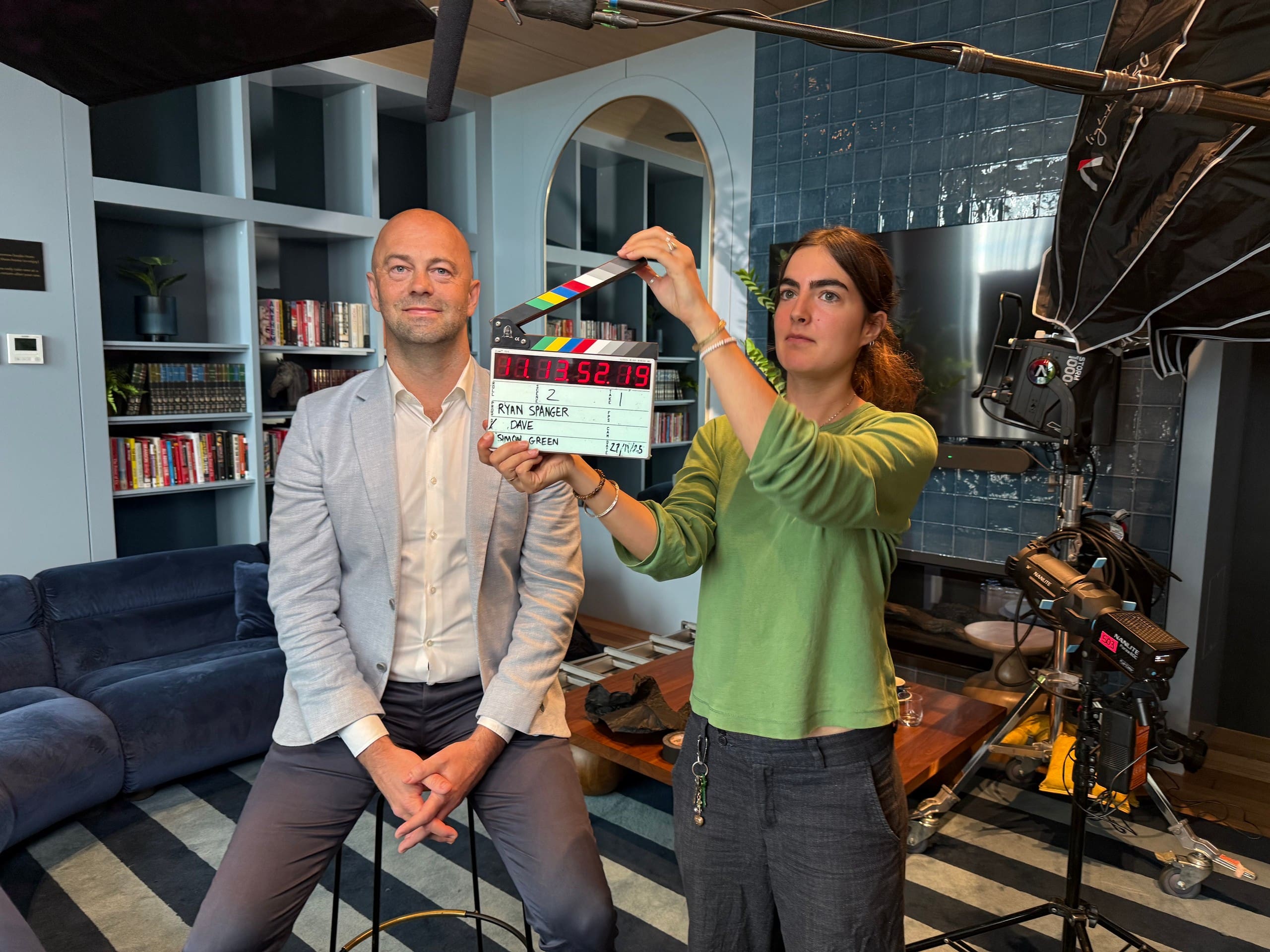
At Dream Engine, we film interviews with business owners, staff, customers, researchers and other people who don’t spend their working lives in front of a camera. These are the practical tips we share before filming a corporate video, testimonial or case study.
1. Know what you want to say
Before the interview, ask who the video is for and what the viewer needs to understand. Write down a few points you want to cover, along with an example that helps explain each one.
For a customer testimonial video, that might mean describing the problem, what you did and what happened afterwards. A specific example will usually give the viewer more to work with than a broad statement about how pleased you are.
Prepare your ideas without memorising a script. If you learn every sentence, it can be harder to listen to the question and answer in your own words.
2. Wear something comfortable and suitable for the setting
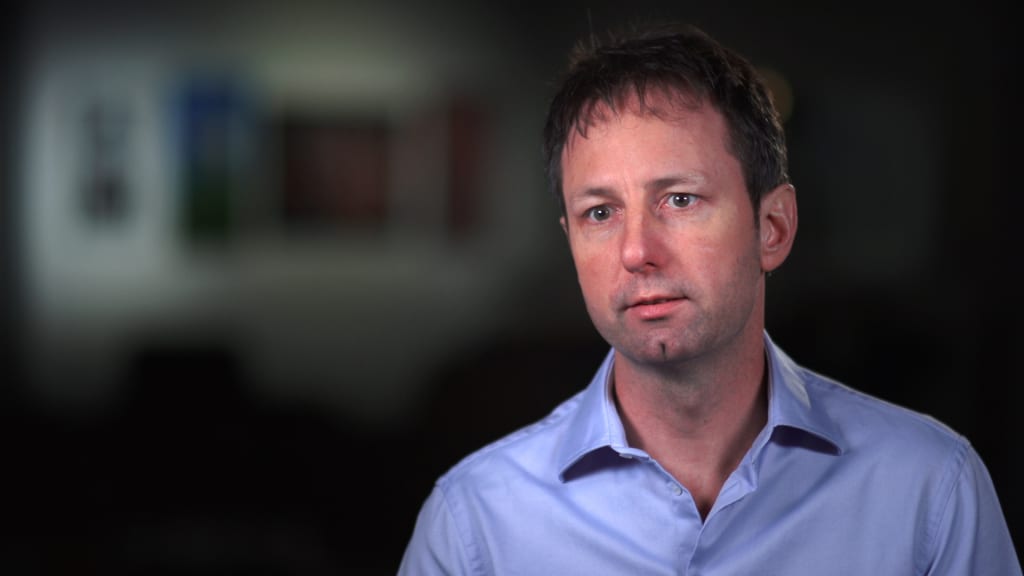
Wear something comfortable that suits the setting and the people who will watch the video. Choose simple colours and avoid tight stripes, small checks and busy patterns, which can distract on camera.
Check clothing with the production team beforehand, particularly if your organisation has a dress code or you’ll be filmed in a specific setting. If you’re unsure, bring a second option and let the crew check how it looks against the background.
3. Give short answers that make sense on their own
In an edited video, viewers may never hear the interviewer’s question. Include enough context in your answer for someone to understand it without that prompt.
For example, if you’re asked why you chose a particular approach, start with “We chose this approach because…” rather than “Because it was easier.” You don’t need to repeat the entire question or use the same opening every time.
Cover one main point, give a useful example, then pause. The interviewer can ask you to explain something further, which is easier than trying to include every detail in one answer.
4. Speak to one person
Think of the interview as a conversation with someone who is interested in your experience. Use the words you would normally use when explaining the subject to a colleague or customer.
Let your interest in the subject come through. You can be a little more expressive if you tend to become very still or quiet when the camera starts, but you don’t need to put on a presenter’s voice or force enthusiasm.
5. Pause before you answer
Let the interviewer finish the question, take a breath and give yourself a moment to think. A short pause feels much longer to the person speaking than it does to the people watching.
It also gives the editor a clean starting point for your answer. If you lose your train of thought, stop for a moment instead of rushing to fill the silence.
6. Check where to look
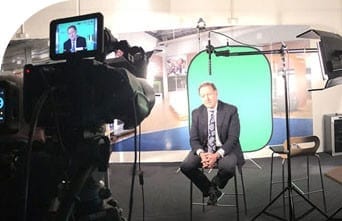
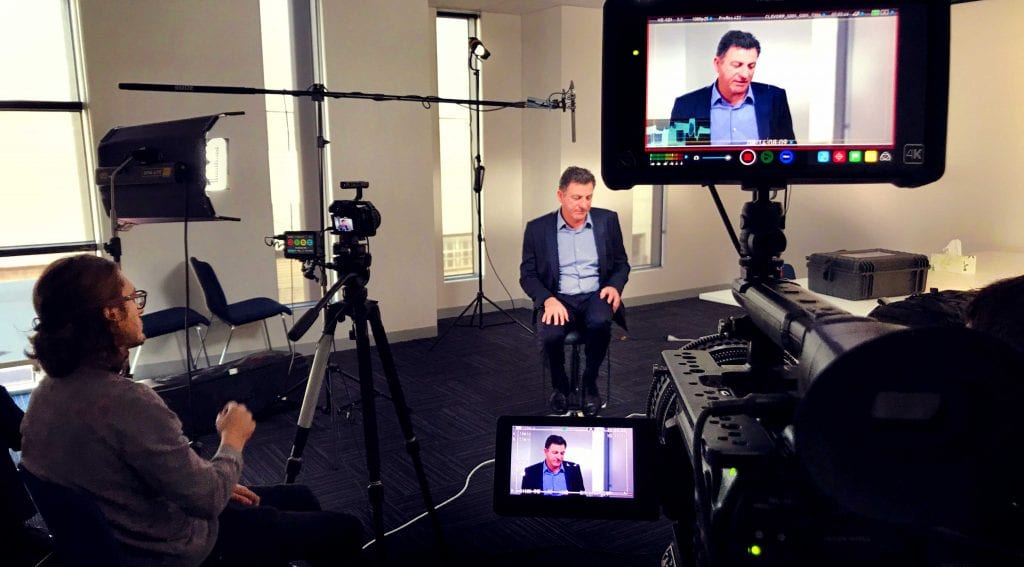
For a conventional interview, you’ll usually look at the interviewer beside the camera. Keeping your attention on that person helps the exchange feel like a conversation and avoids your eyes moving between the crew, the lens and the room.
Some videos are designed for you to speak directly to the viewer through the lens. The crew will explain which approach you’re using and help you find a comfortable position before recording.
7. Ask to try an answer again
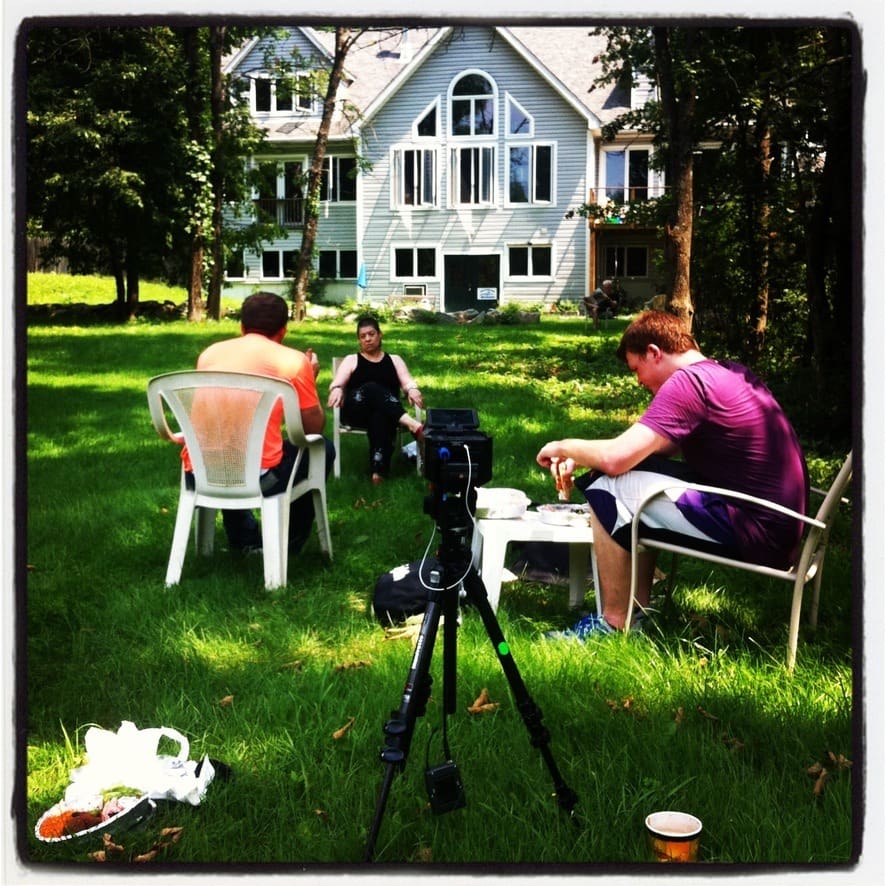
A recorded interview gives you room to stop and have another go. If you’ve missed your main point or used a phrase that doesn’t sound like you, tell the interviewer and start again.
You can also ask for a break or mention anything that is making you uncomfortable. Once the first few questions are behind you, the setup often starts to feel more familiar and you can settle into the conversation.
Before filming starts
Confirm the location, arrival time and who will be interviewing you. If you have questions about the subject, clothing or how the video will be used, raise them before the day so the team has time to help.
If you’re organising the shoot as well as appearing in it, our guide to filming professional video interviews explains what to consider when choosing a room and planning the setup. You can also read about our corporate video production services in Melbourne.
Interview preparation
Common questions about being interviewed on camera
Practical answers to help you feel ready for the conversation.
Will I get the questions in advance?
Ask the person organising the interview what they can share beforehand. Knowing the topics and purpose is useful, while allowing follow-up questions gives you room to explain an interesting point in more detail.
Should I memorise my answers?
Prepare the points and examples you want to discuss, rather than learning a script. That makes it easier to respond to the actual question and speak naturally.
What if I’m nervous?
Tell the interviewer how you’re feeling and ask them to explain the process. Starting with a straightforward question, taking your time and knowing you can try again can make the experience easier.
How long should each answer be?
There isn’t one correct length for every video. Start with the main point and an example, then let the interviewer ask for more detail if the story needs it.
Planning a filmed interview?
Dream Engine helps organisations prepare for and film interviews across Melbourne, from customer stories to staff and leadership videos. Get in touch to discuss your project and what you need from the interview.
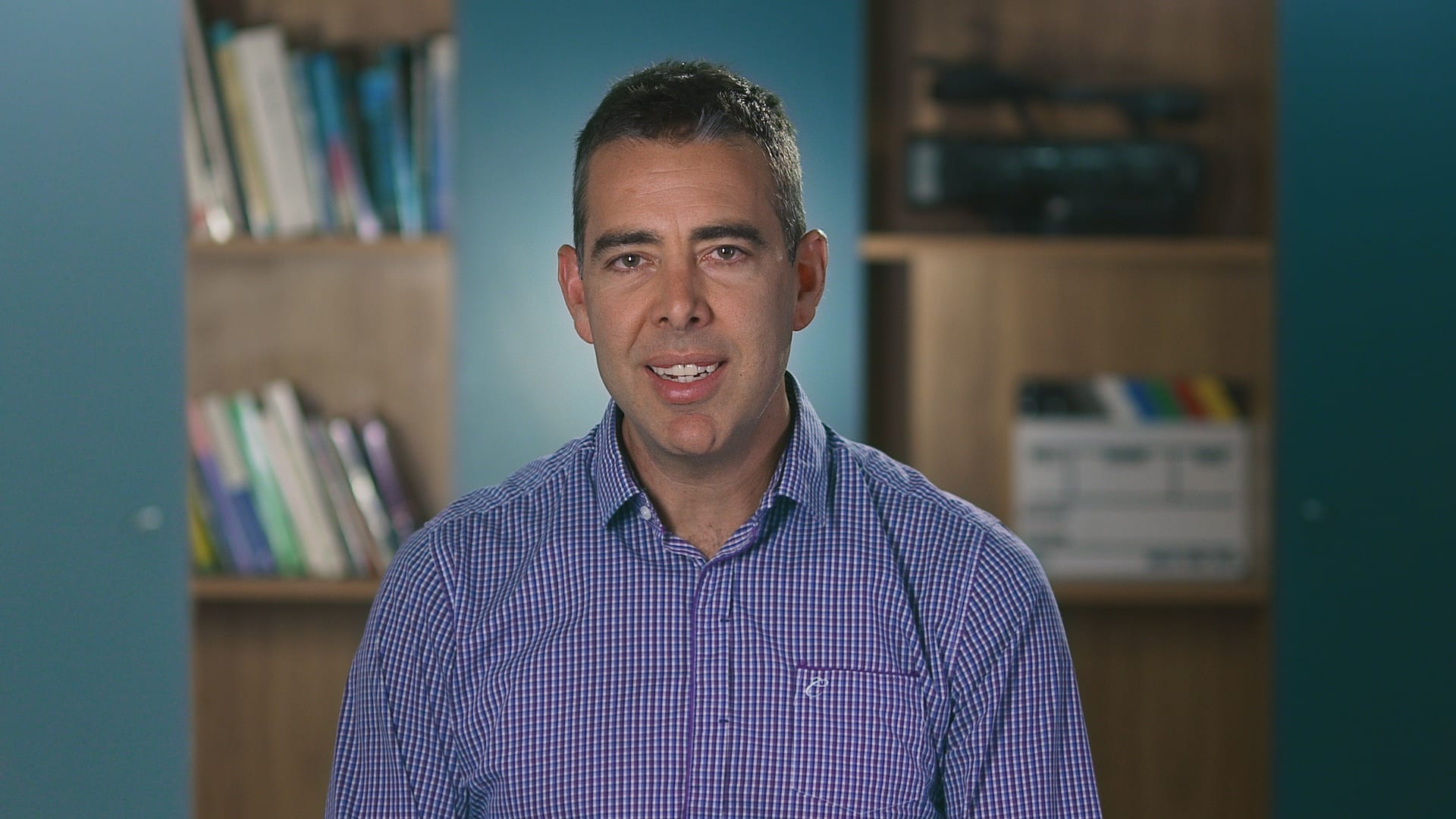
Ryan Spanger is the founder and managing director of Dream Engine, a Melbourne video production company established in 2002. Over the past two decades, he’s produced hundreds of videos for businesses, government departments, universities and healthcare organisations across Australia. Ryan specialises in helping organisations explain complex ideas through clear, engaging video content, with particular experience in corporate communications, training and education.