
Allow time for the setup
Compact cameras and LED lights make loading in easier. We still allow time to light the scene, frame the shots and check sound before recording.
Video production company in Melbourne, Australia.
We choose our equipment to suit the look we want to create and the practical demands of the shoot. The setup gives us control over the image and sound, while allowing us to work efficiently in the location.
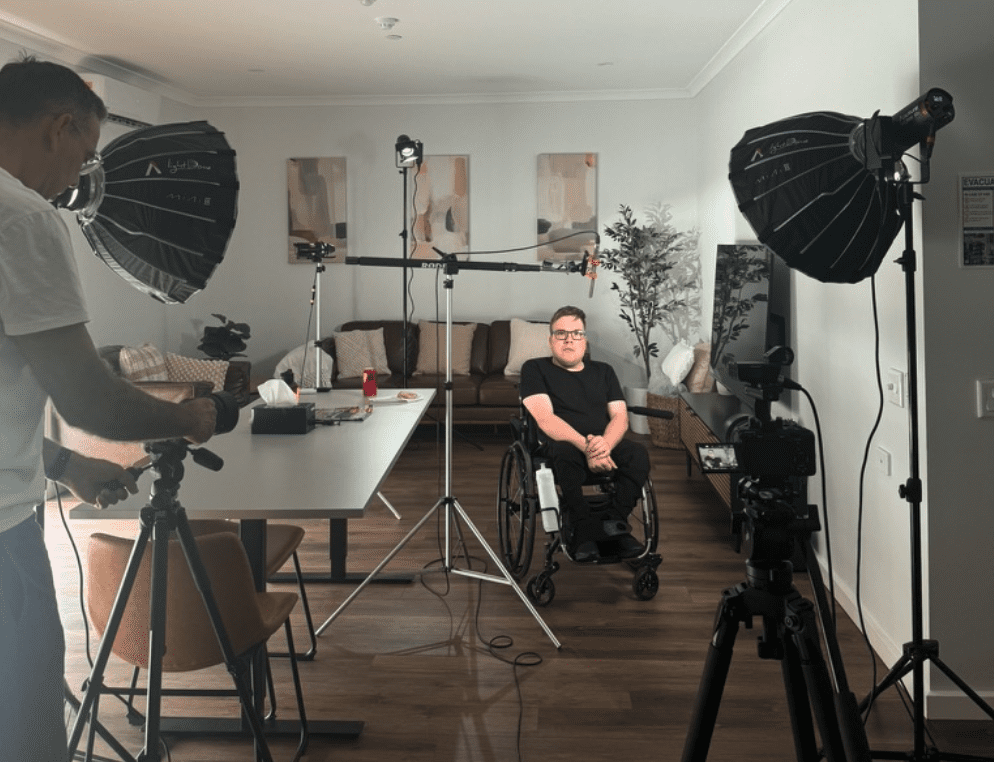
Our equipment approach
The camera, lens, lighting and microphone choices affect how your video looks and sounds. We plan them around the shots we need, the location and how the finished video will be used.
Much of our filming happens in offices, hospitals, universities and working facilities. Our compact camera, lighting and sound kit lets us work in these spaces and move between setups with minimal disruption.
A workplace shoot may involve interviews in one room and supporting footage across several others. We plan the kit and the order of filming to make good use of the time available.
Compact cameras and LED lights make loading in easier. We still allow time to light the scene, frame the shots and check sound before recording.
A smaller kit helps us film several interviews and supporting shots across a workplace, with less equipment to pack and move each time.
We keep stands, cases and cables under control, protect access and avoid occupying more space than we need.
Our regular kit covers most corporate filming. We add specialist equipment when it solves a particular problem or helps us create a planned shot.
The Sony FX6 is our main camera for interviews and controlled production work. It gives us the image quality, professional connections and built-in controls we need while remaining compact enough for an office shoot.
The smaller Sony FX3 works well as a second interview angle, on a camera stabiliser or in a tight location. Using cameras from the same Sony Cinema Line also helps the pictures match when we cut between them.
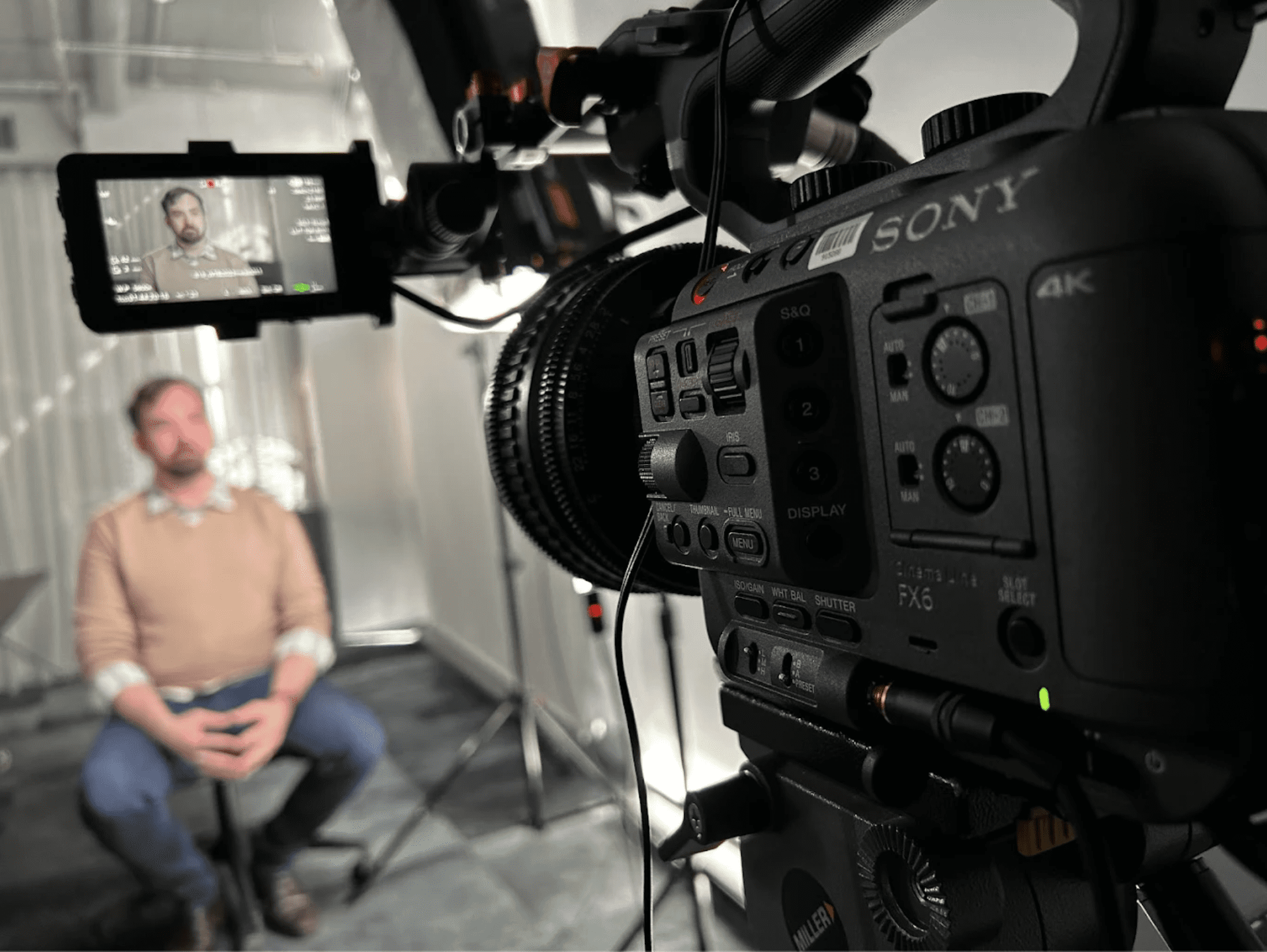
We can record in 4K and work to an agency or post-production specification when one is supplied. We confirm the recording settings before filming so the footage suits the edit and final delivery.
We carry a range of Sony G Master lenses and choose them around the room, the shot and the amount of movement. A wider lens can show someone in their surroundings. A longer lens lets us frame a tighter interview shot or film activity from further away.
We also consider camera position and how much of the background stays in focus. Together, these choices help us direct attention, establish the setting and create the look we’ve planned.
We use Aputure and amaran LED lighting, including compact Halo lights. These are portable enough for workplace filming and give us control over the direction and level of light.
For interviews, we often pair the lights with large softboxes. The larger light source produces soft, flattering light on a person’s face. We then control the spill so the light doesn’t wash over screens, walls or other parts of the background.
Daylight and lamps already in the room can become part of the setup. We balance them with our own lights to create the mood and contrast the scene needs. Read more about lighting for video production.
For interviews, our first choice is normally a shotgun microphone positioned on a boom just outside the frame. It gives us clear, natural dialogue without attaching a microphone to the person on camera.
We mainly use Sennheiser wireless lapel microphones for run-and-gun filming, documentary coverage and situations where the person needs to move freely. The microphone choice depends on the action, the location and how much control we have over the shot.
We monitor the sound throughout the take and, where useful, record a second source as backup. We listen for air conditioning, traffic and clothing noise so we can address problems while we’re still on location.
See how we plan sound recording for more demanding productions.
The support equipment helps us control camera movement and carry out the planned shots. We can also arrange autocue or drone filming where they’re needed.
Tripods give interviews and formal shots a stable base. A camera stabiliser lets us follow someone through a workplace or create a smooth moving shot without laying track.
A compact slider creates a short, controlled move for products, machinery, documents and detail shots. It adds movement without requiring a large grip setup.
For scripted presentations, we can add an autocue so the presenter can read while looking directly into the lens. See how we use autocue in a Dream Engine production.
A drone can establish the scale and setting of a building, facility, property or construction site. We plan the aerial footage with the ground filming. Read about how we plan drone footage.
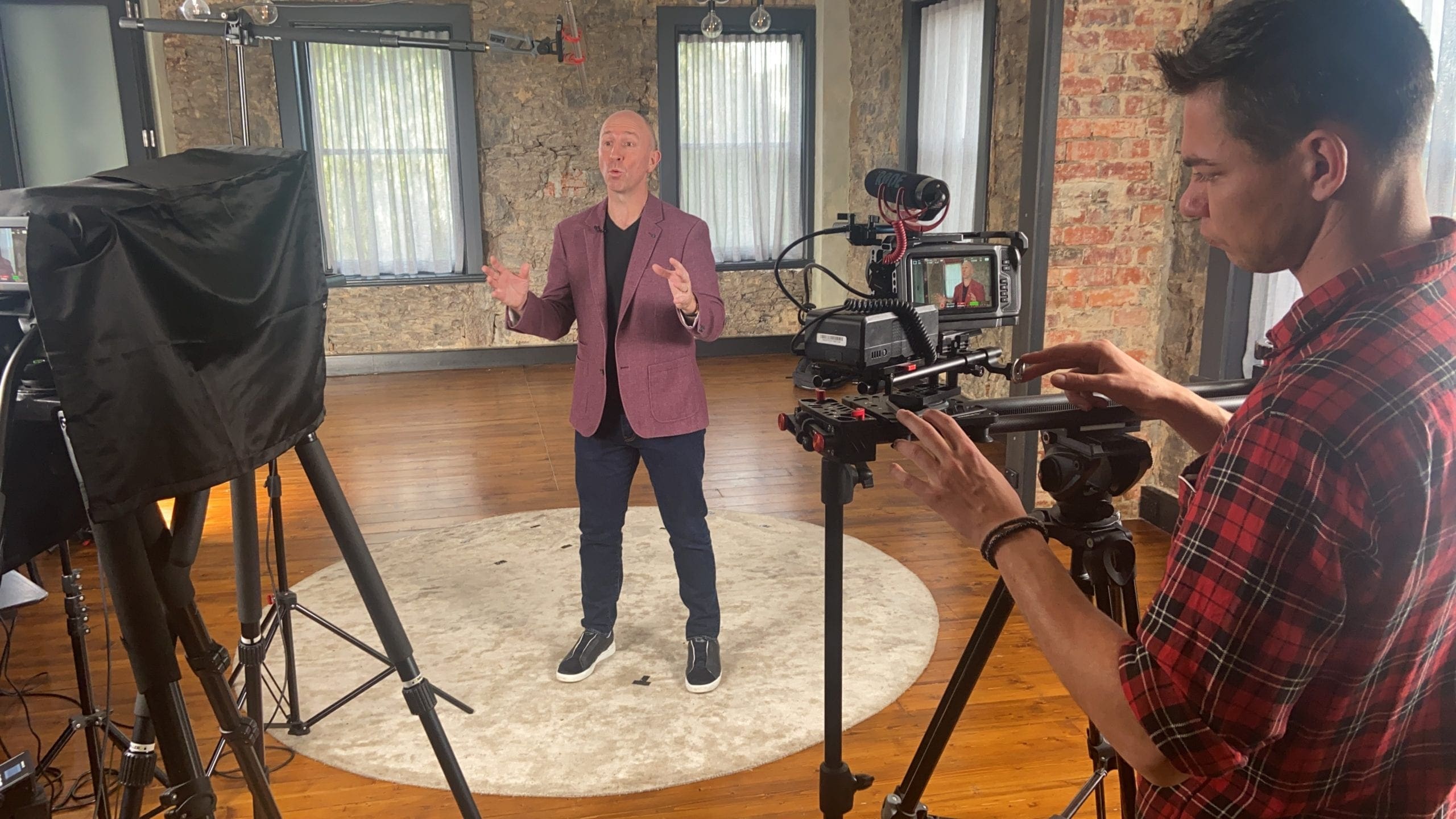
Camera movement
A moving shot can reveal a space, follow a person at work or draw attention to a product detail. A steady interview frame gives the viewer time to concentrate on what someone is saying.
We plan the movement before choosing the support equipment. The distance the camera needs to travel, the surface beneath it and whether we need to repeat the same move all influence the choice of stabiliser, slider, dolly or tripod.
Most locations aren’t purpose-built studios. We plan for the real room, the people using it and the amount of time available.
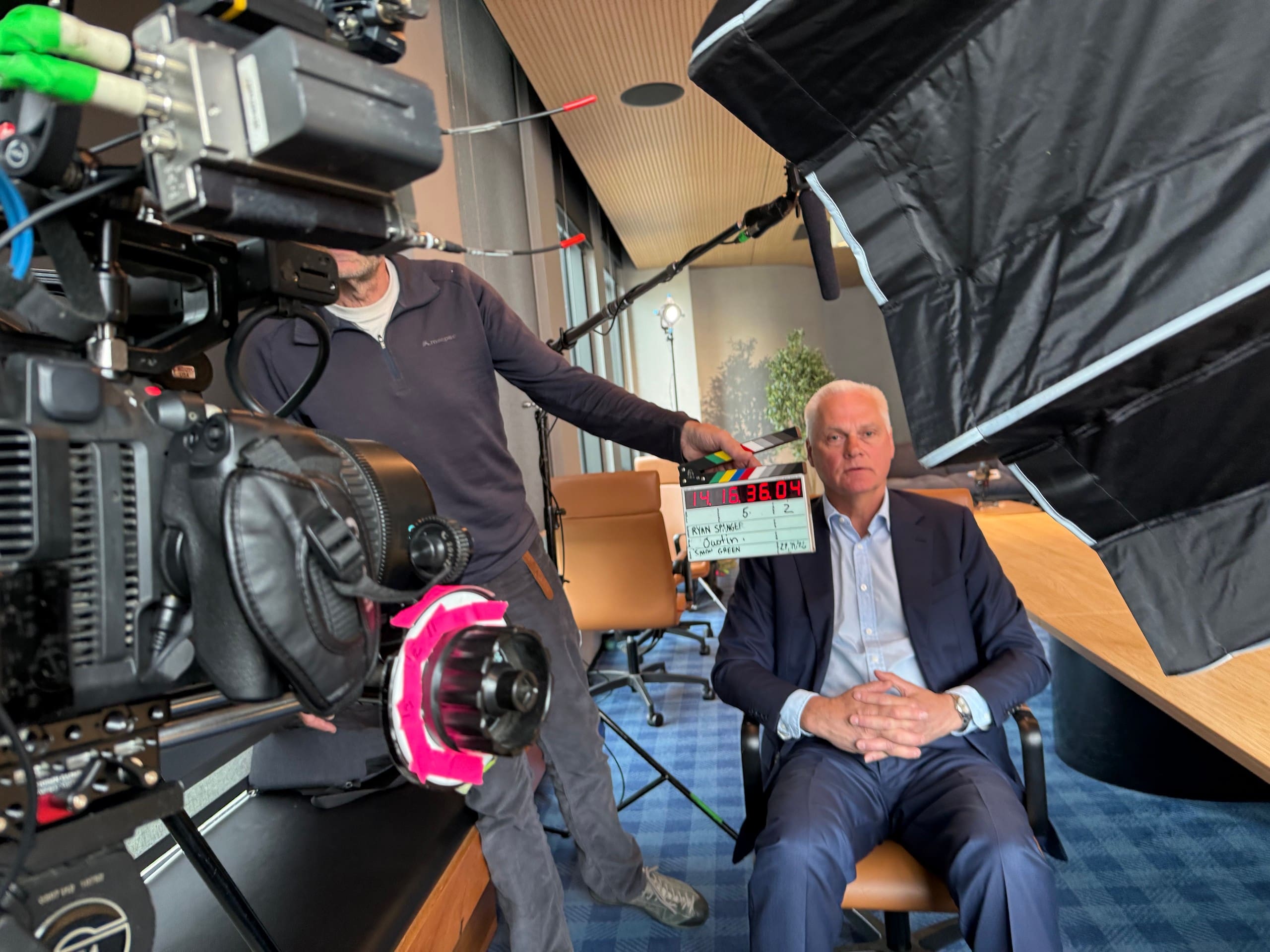
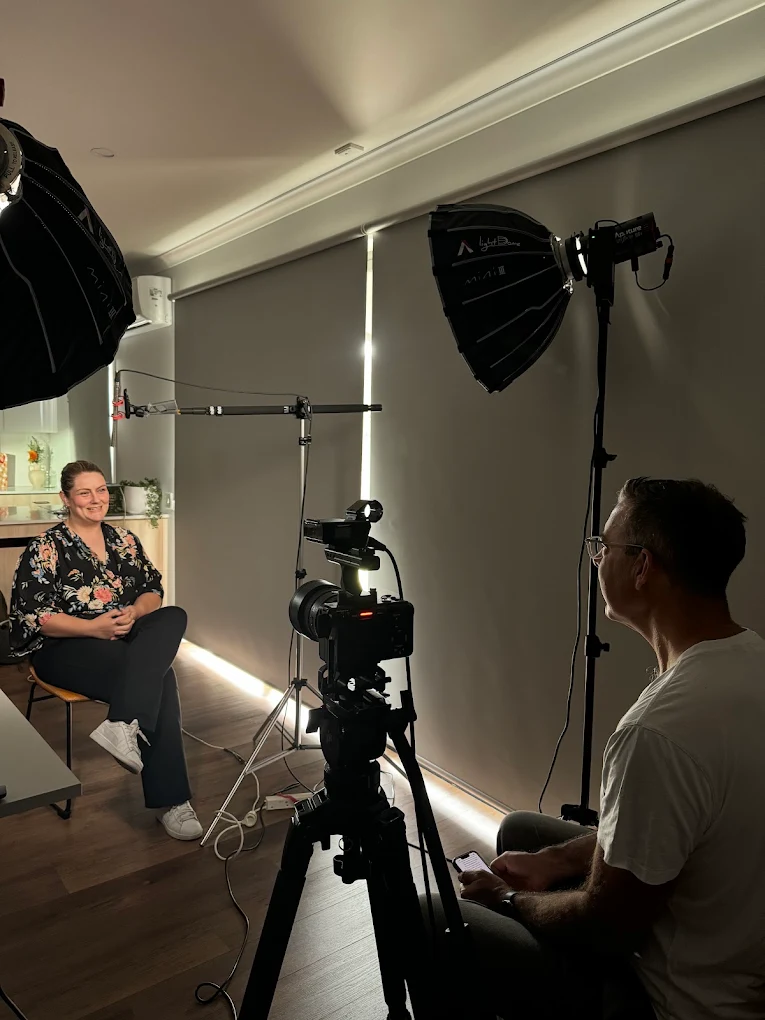
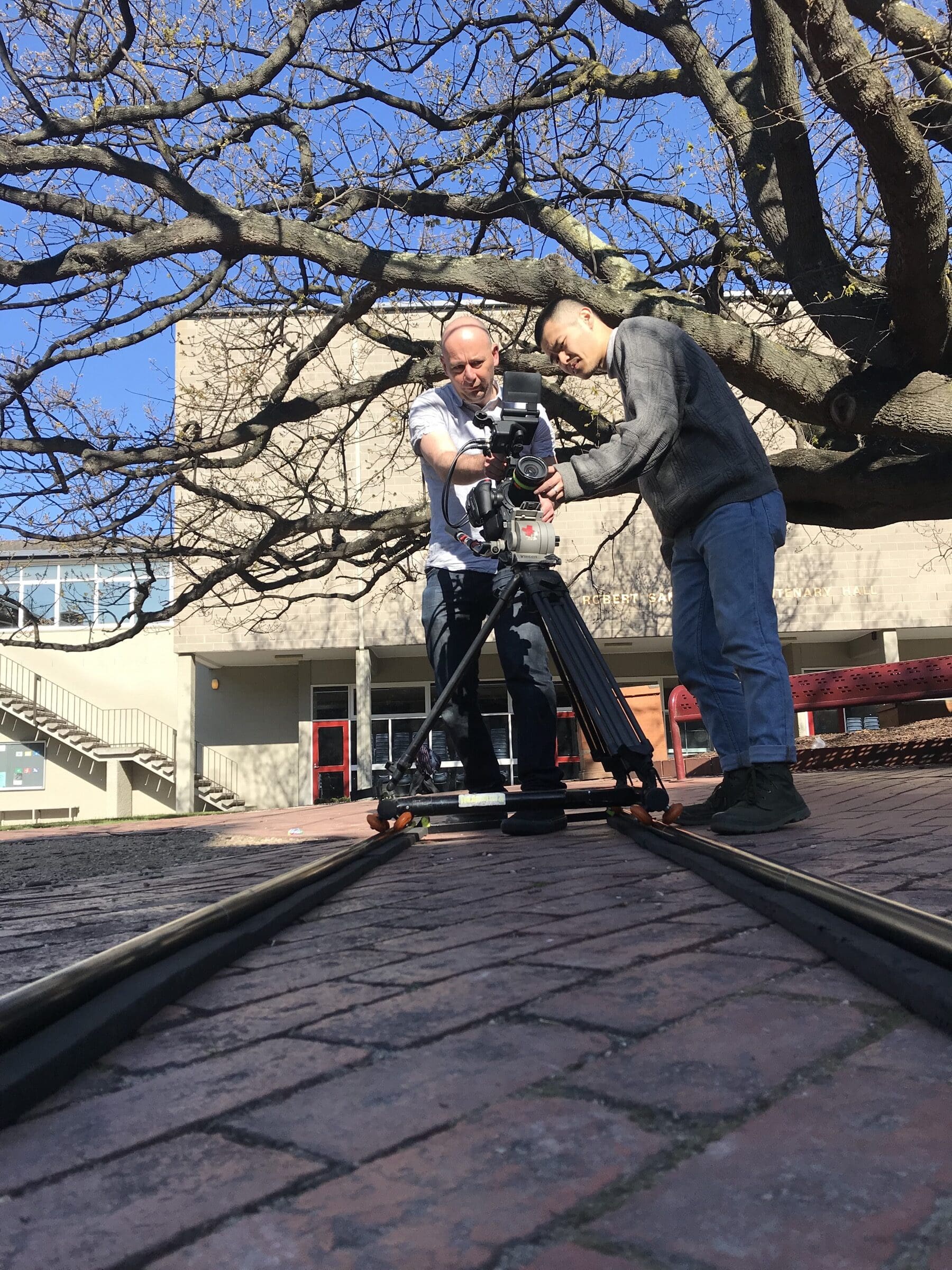
The room, available floor space and planned camera movement determine how much equipment we bring. These setups show an office interview and a shoot using track and dolly.
Larger productions
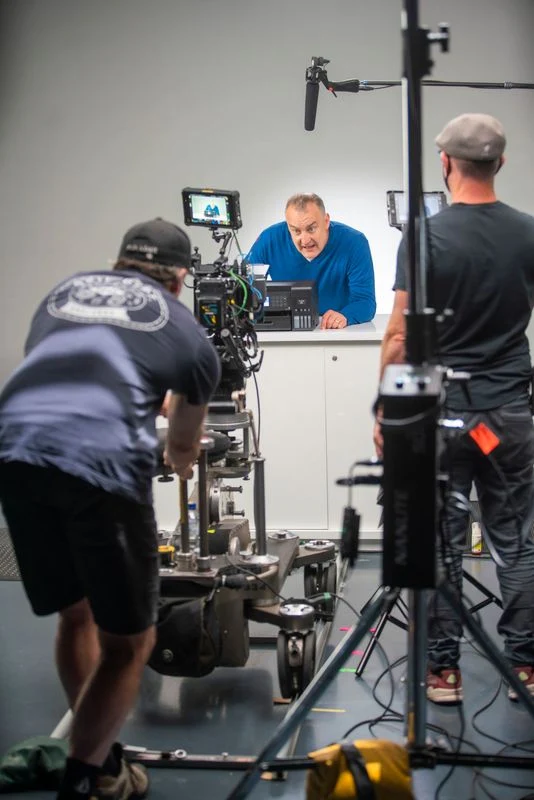
A TV commercial production or other planned shoot may need equipment beyond our regular kit. We can arrange dollies, track, jibs, cranes, specialist lenses, larger lighting and grip equipment, and additional monitoring.
We plan the hire during pre-production and include it in the quote. We also allow for setup time and any additional operator or grip needed to use the equipment.
Clear production scope
The normal camera, lens, lighting, sound and support equipment required for the agreed shoot is listed as part of the production scope.
If the job needs another camera angle, operator, sound recordist, lighting technician or grip, we show that separately.
Drone, autocue, dolly, track, crane, jib, studio or other hired equipment is identified before approval, with any additional crew requirement.
We bring the batteries and recording media needed for the planned day, monitor the recordings and manage the footage through the agreed post-production workflow.
Frequently asked questions
No. Tell us what needs to be filmed, where it’ll happen and how the finished video will be used. We’ll recommend the camera, lighting, sound and support equipment needed for the job.
Our regular camera kit includes Sony FX6 and FX3 Cinema Line cameras with Sony G Master lenses. We use the FX6 as a principal interview and production camera, with the compact FX3 available for a second angle, stabilised movement and tighter locations.
Yes. The normal camera, lighting, sound and support kit for the agreed shoot is included in the production scope. If the job needs specialist hired equipment or extra crew, we identify that separately before you approve the quote.
Usually. Our compact cameras and LED lights are well suited to office filming. We still need enough space for safe stands, suitable framing and a workable background, so photographs or a quick location check can help us plan the setup.
A well-lit, carefully composed interview normally takes 45 minutes to one hour to set up properly. That gives us time to position the camera, shape the light, control the background and check the sound. Difficult rooms or more complex setups can take longer.
A second camera gives the editor another angle and can make it easier to shorten or rearrange an interview cleanly. We recommend it when the extra coverage will help the final edit or when there’s no opportunity to repeat the interview.
Yes. We can arrange equipment such as autocue, drone, track and dolly, jibs, cranes, specialist lenses, larger lighting and additional monitoring. We include the equipment, hire period and any extra operator in the quote.
Yes. Send us the camera, sound, frame rate, resolution, colour and delivery requirements before the shoot. We’ll confirm the equipment and workflow needed to meet them.
Let us know what you have in mind, where you’d like to film and when you need the video. We can talk through the options and recommend the crew and equipment.
