A professional video interview needs clear sound, suitable lighting and a setting that supports the story. It also needs an interviewee who has enough time and support to speak comfortably.
At Dream Engine, we film interviews for businesses, universities, healthcare organisations and government departments in Melbourne and beyond. The following approach brings together the practical decisions that shape the interview, from planning the room to choosing the frame.
Start with the purpose of the interview
Agree on the audience, the subject and how the finished video will be used before choosing cameras or lighting. Capture these decisions in a video production brief. A customer case study, a research interview and a short staff profile may need quite different questions, settings and pacing.
Share visual references with the producer, interviewer and camera operator so everyone understands the intended approach. Decide whether the subject will look towards an interviewer or speak directly to the lens, and whether the edit also needs footage of their work or surroundings.
Choose a location that helps tell the story
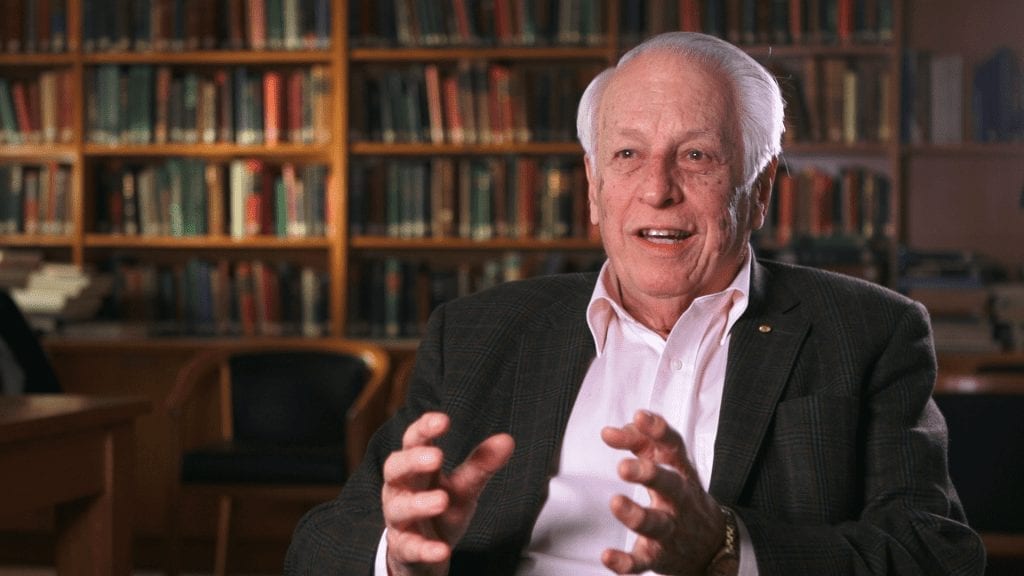
A setting can tell the viewer something useful before the interviewee speaks. A laboratory, library or workplace may help explain the person’s role, provided it is suitable for recording.
On one Dream Engine shoot, we were initially offered a plain white room. We found a library on location instead, giving the interview a more useful background and greater visual depth.
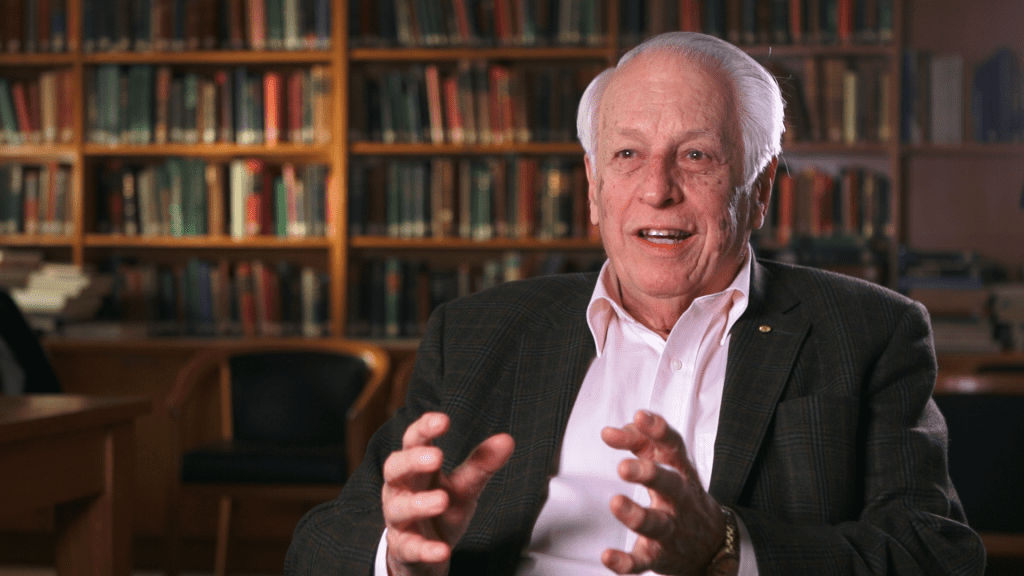
During location scouting, check that the room has space for the subject, interviewer, camera and lights without crowding anyone. Where possible, leave some distance between the interviewee and the background so the camera operator has options for framing and focus.
A visually interesting room is only useful if you can work in it without repeated interruptions. Book the space for setup, recording and pack-down, and let nearby staff know when filming is taking place.
Check the sound before committing to the room
Stand quietly in the proposed location and listen. Traffic, nearby conversations, air conditioning and equipment can all interfere with a recording, even when the room looks ideal.
Choose microphone placement for the speaker and the setting, then make a test recording and listen through headphones. Check for clothing rubbing against a lapel microphone, jewellery making noise and changes in level when the person turns or moves.
Keep monitoring sound during the interview. If an interruption affects an answer, make a note and record that section again while the subject and setup are still available. Our guide to sound recording for video production explains microphone choices and the role of a dedicated sound recordist.
Use lighting to shape the interview
Begin with the face. Soft, controlled light can give a flattering result, while its direction helps create shape rather than leaving the image flat.
Look at the background as well as the subject. A separate light or a carefully chosen practical light can add depth, but it should support the person speaking rather than pull attention away from them.
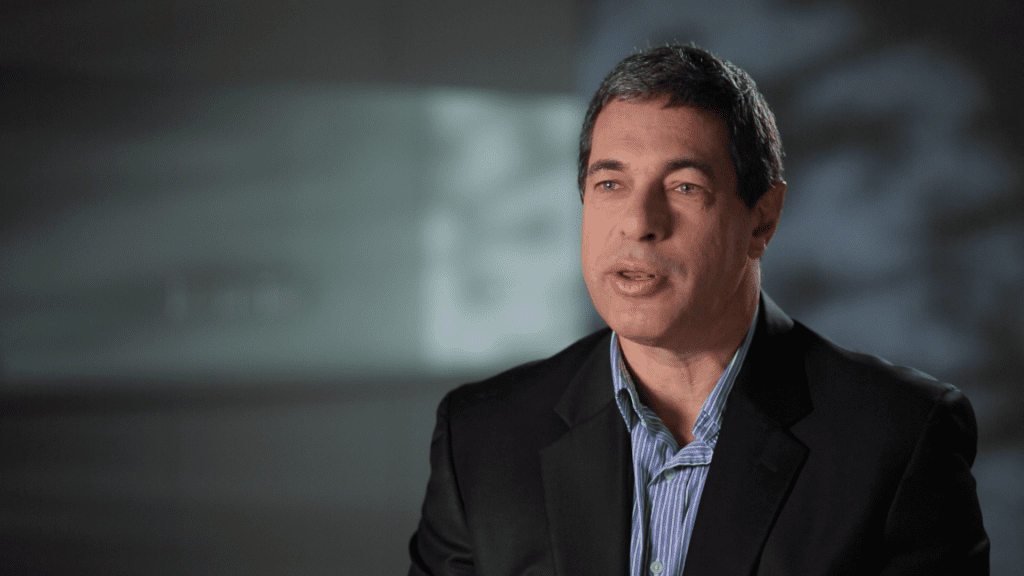
Pay attention to colour as well as brightness. Daylight and warm room lighting may give different colours to the face and background, so choose a deliberate combination and set the camera’s white balance for the setup.
At the Melbourne Synchrotron, we used textured lighting to add interest to a clinical setting. That approach suited the location; a restrained executive interview may call for a simpler treatment.
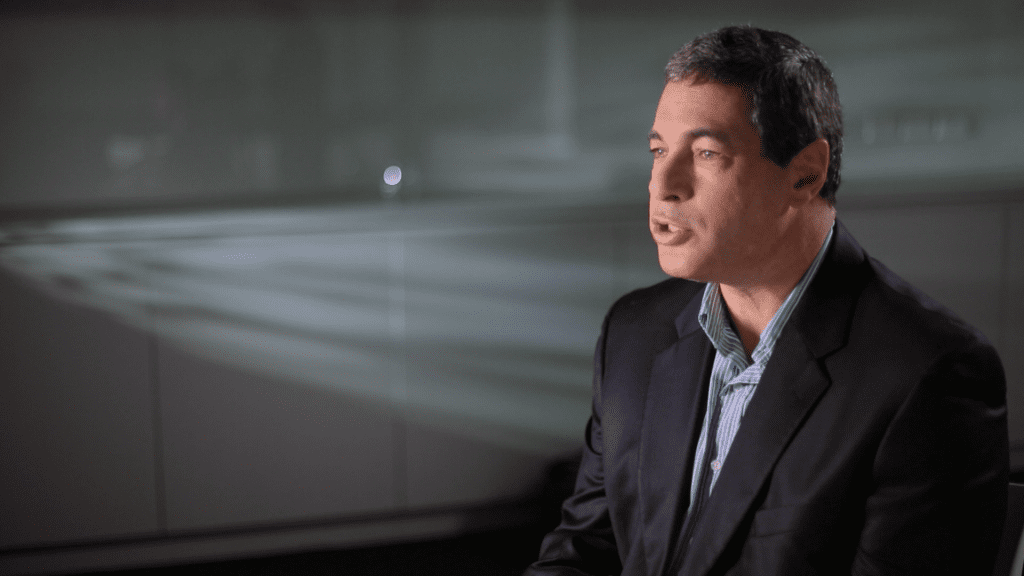
Watch for reflections in glasses and changes in daylight during a long interview. Ask the subject whether the lighting and seating are comfortable, and adjust the setup before those small distractions affect the conversation.
Choose the interview shot size
The shot size determines how much of the person and their surroundings the viewer sees. Choose it for the story and the subject’s movement, rather than using the same crop for every interview.
| Shot | Typical framing | Useful when |
|---|---|---|
| Medium shot | Approximately waist upwards | Gestures, posture and the setting contribute to what the person is saying. |
| Medium close-up | Approximately chest upwards | You want to see facial expression while retaining some body language and surroundings. |
| Close-up | The face occupies most of the frame | A particular answer benefits from closer attention to expression. |
These are starting points, not fixed measurements. Check the frame while the subject speaks and moves, especially if they use their hands or lean forward when making a point.
Check headroom, eyeline and looking room
Leave suitable space above the head and avoid a crop that feels accidental. For an interview looking off camera, allowing room on the side the person faces can help the composition feel comfortable.
Place the interviewer close enough to the camera to create the intended eyeline, and check that position with the subject before recording. For direct-to-camera delivery, set up for the person to look into the lens instead.
Allow for how the footage will be delivered. A frame that works for a widescreen video may need more space if a vertical version or on-screen text will also be required.
Choose the lens and background focus together
A soft background can help separate an interviewee from a setting that adds little to the story. If the surroundings explain their work, keeping more of that detail visible may be the better choice.
In an interview with an IT professional filmed in a gallery, we softened the background to keep attention on the subject. The location was available to us, but its detail was not the point of the interview.
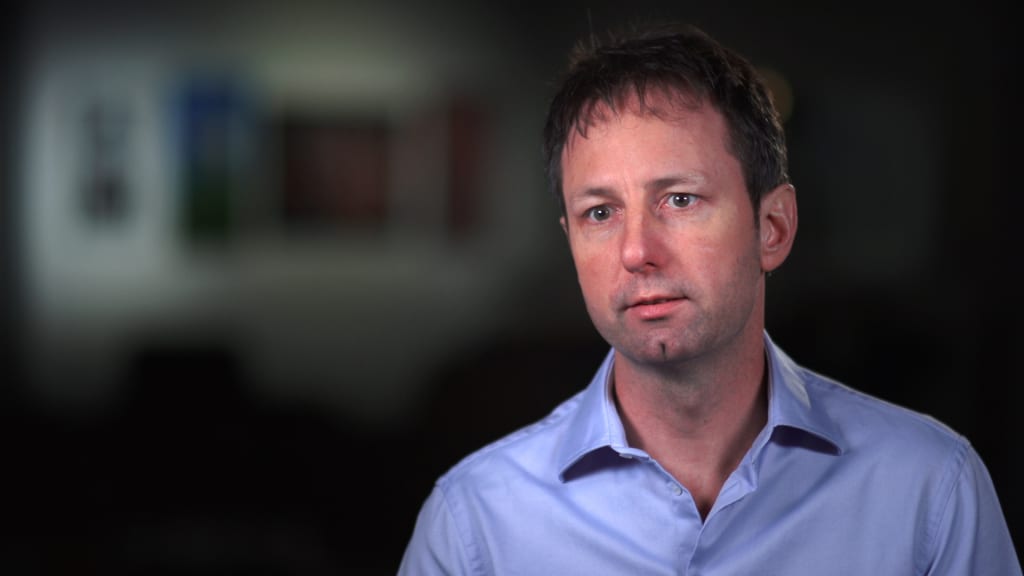
Consider the camera position, lens and aperture as one set of decisions. Check that the chosen focus remains practical when the person moves; a very shallow depth of field can make small movements more difficult to accommodate.
Give the interviewee time to settle in
Explain who will ask the questions, where the person should look and how the recording will work. A short conversation before filming gives them a chance to ask questions and become familiar with the crew.
Begin with something straightforward, listen to the answer and allow time for follow-up questions. If an answer needs another take, explain what would help rather than simply asking the subject to repeat it.
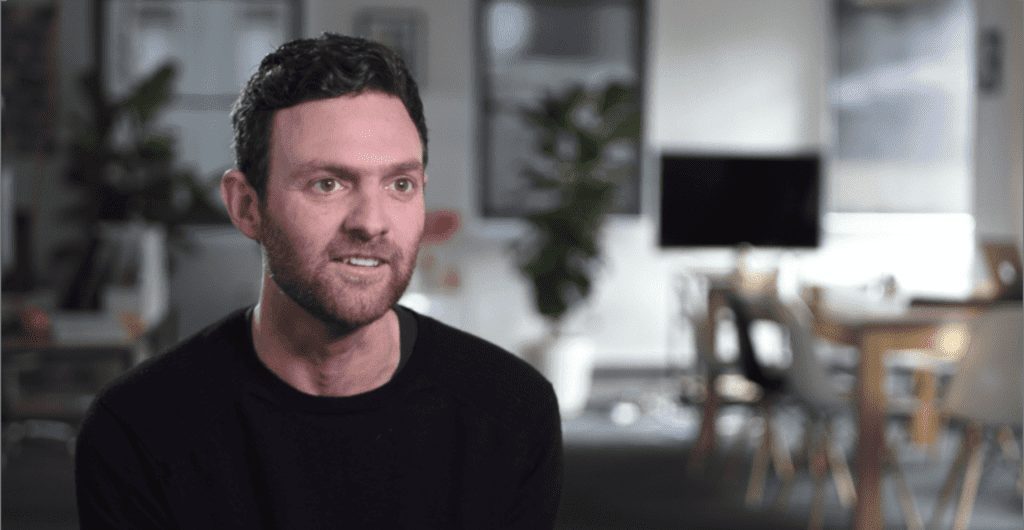
Send participants our seven tips for being interviewed on camera before the shoot. It covers preparation, clothing, complete answers and what to expect during recording.
A short checklist before recording
- Confirm the audience, interview topics and intended video formats.
- Check the room for sound, access, space and likely interruptions.
- Check framing, focus, exposure, white balance and audio with the subject in position.
- Confirm where the subject will look and give them time to ask questions.
- Record and review a short test before starting the interview.
- Allow time for another take and any supporting footage the edit needs.
Common questions about filming interviews
Should we film in a studio or at our workplace?
A workplace can provide useful context, while a studio offers more control over the environment. Base the choice on the story, sound, available space and how reliably you can avoid interruptions. Our guide to video production studio hire in Melbourne explains when a studio is useful and when filming on location may be a better fit.
What is a good starting shot for a corporate interview?
A medium close-up is often a practical starting point because it shows expression and some body language. Widen or tighten the frame to suit the person, the setting and the intended edit.
Should the background always be blurred?
No. A soft background can reduce distractions, but visible surroundings can help explain the subject’s work or experience.
Do we need two cameras?
Some interviews work well with one camera and suitable supporting footage. A second angle can give the editor more options, but it also needs planning for matching eyelines, lighting and framing.
What should we organise before the crew arrives?
Confirm the participants, schedule, interview topics and room access. Share any restrictions or requirements in advance so the crew can plan the setup and allow enough time.
Interview filming in Melbourne
Dream Engine provides camera operators and crews in Melbourne for professional interviews, customer stories and corporate videos. Get in touch to discuss the people you want to interview, the locations and how the footage will be used.
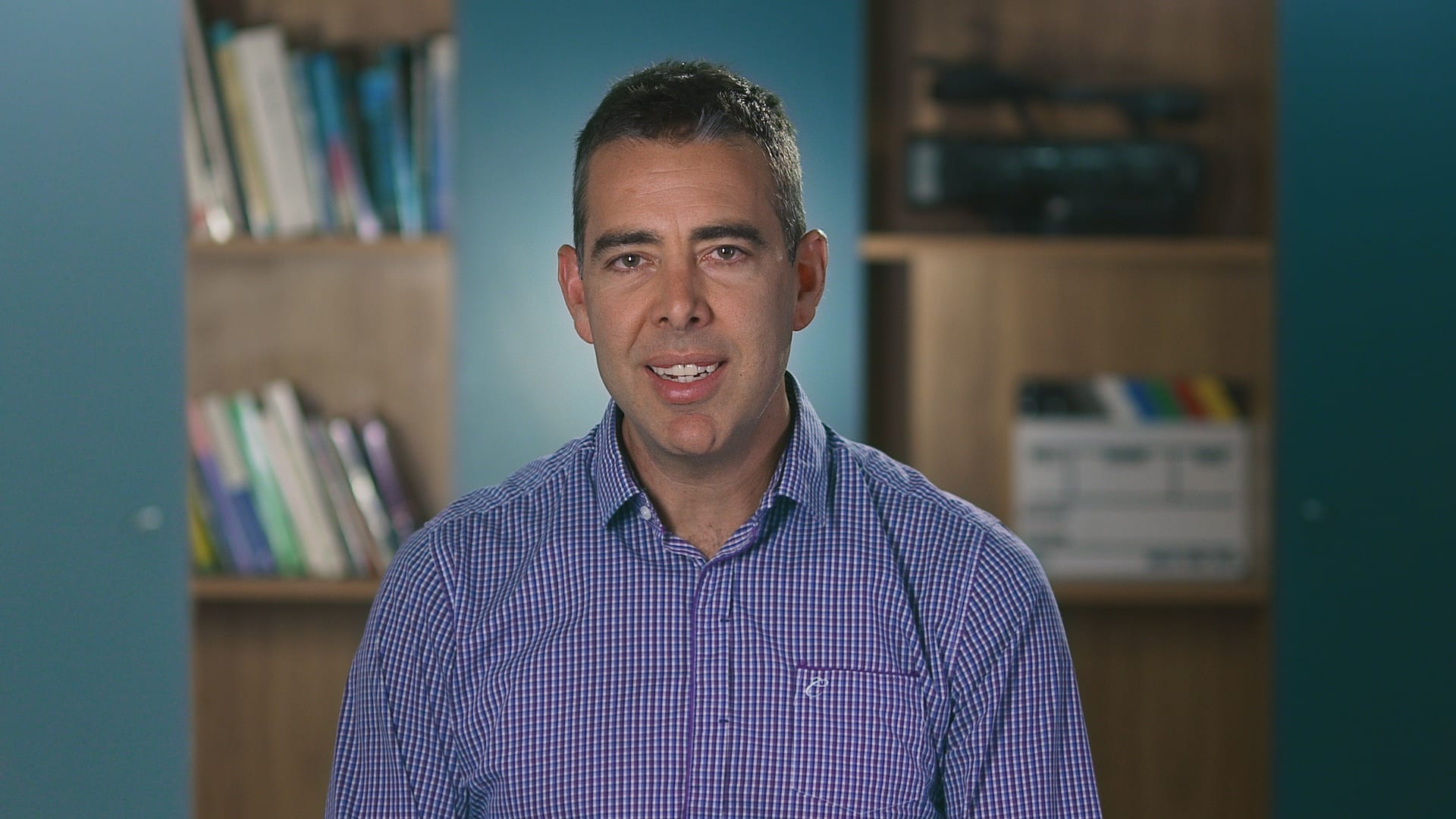
Ryan Spanger is the founder and managing director of Dream Engine, a Melbourne video production company established in 2002. Over the past two decades, he’s produced hundreds of videos for businesses, government departments, universities and healthcare organisations across Australia. Ryan specialises in helping organisations explain complex ideas through clear, engaging video content, with particular experience in corporate communications, training and education.