
Background
Three Cities, One Live Event
prefabAUS is Australia’s peak body for prefabricated and offsite construction, bringing together manufacturers, builders, architects, engineers, researchers and government to develop more sustainable ways of building. We filmed this event as part of our construction video production in Melbourne work.
On 21 August 2026, prefabAUS brought three finalist teams together for the online presentations in the Autodesk Challenge Cup.
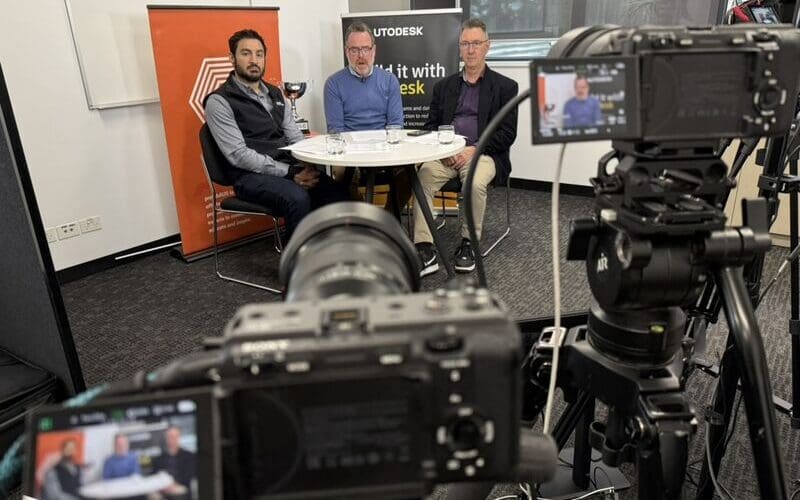
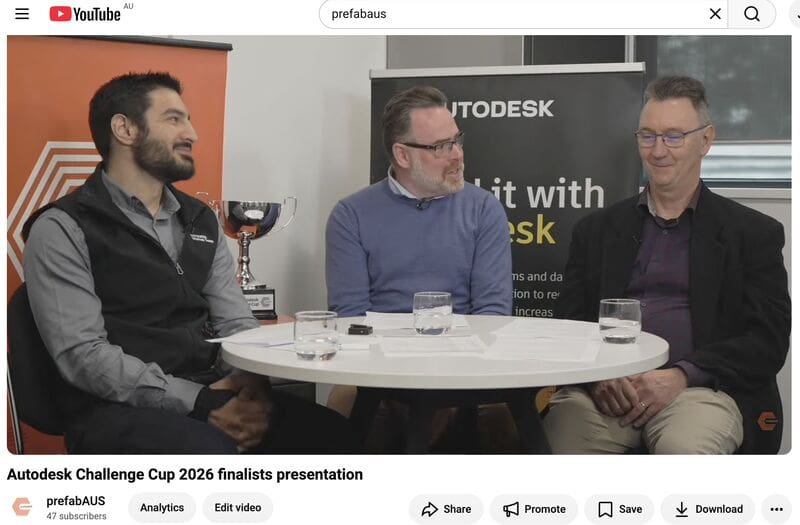
Two student teams joined from Perth and one from Sydney, while Damien Crough from prefabAUS, head judge Laurence Robinson and Daniel Noviello from Autodesk hosted from the Broadmeadows campus of Melbourne Polytechnic.
The Autodesk Challenge Cup is a university team competition for students in architecture, engineering and construction management. The 2026 brief, Designing for Country, asked teams to consider how Smart Building housing solutions and Modern Methods of Construction could foster cultural connection.
The challenge
Different Presenters, Different Time Zones, One Public Program
The event needed to feel like one coordinated presentation, even though the people taking part were spread across three cities and two time zones.
The Melbourne hosts had to move between team introductions, presentation decks, video playback and Q&A without losing the pace of the live program. Remote audio, screen sharing and handovers all needed to be tested before the broadcast began.
At the same time, prefabAUS wanted the event to be easy to join. A familiar public platform meant students, AEC professionals and supporters could watch without travelling to a single venue.
The action
One Broadcast Built Around the Three Finalist Teams
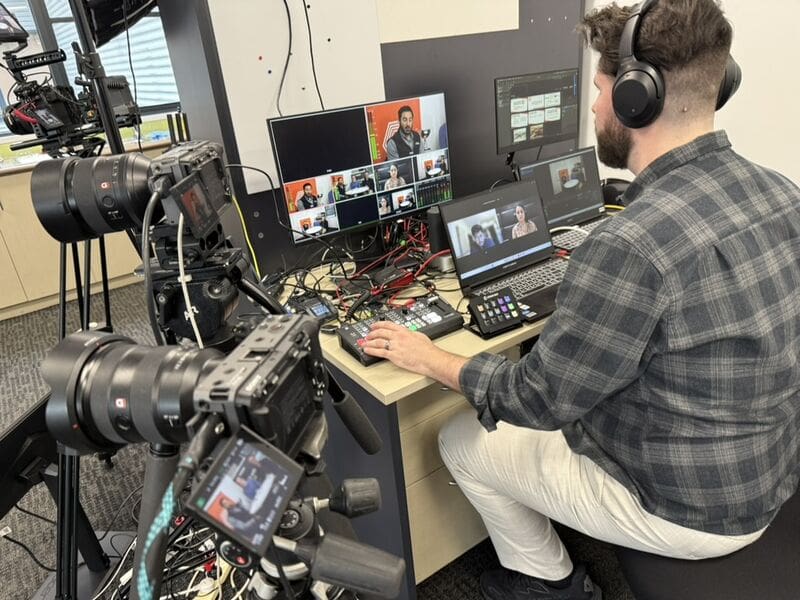
Dream Engine’s live streaming production in Melbourne brought multiple cameras, professional audio, live switching and presentation integration into one coordinated program. The finalist presenters joined through Zoom, while viewers watched on YouTube.
Rehearsals and PowerPoint testing took place before the event, helping each team prepare for the broadcast and allowing remote audio, presentation playback and handovers to be checked.
Western Sydney University
Kinforge
Project: Confluence Living
Curtin University
Stable Sands Studio
Project: Back-to-Back
Curtin University
Horizon Studio
Project: Designing for Country
Audience participation
The Audience Was Part of the Event
The livestream was designed to let the audience take part.
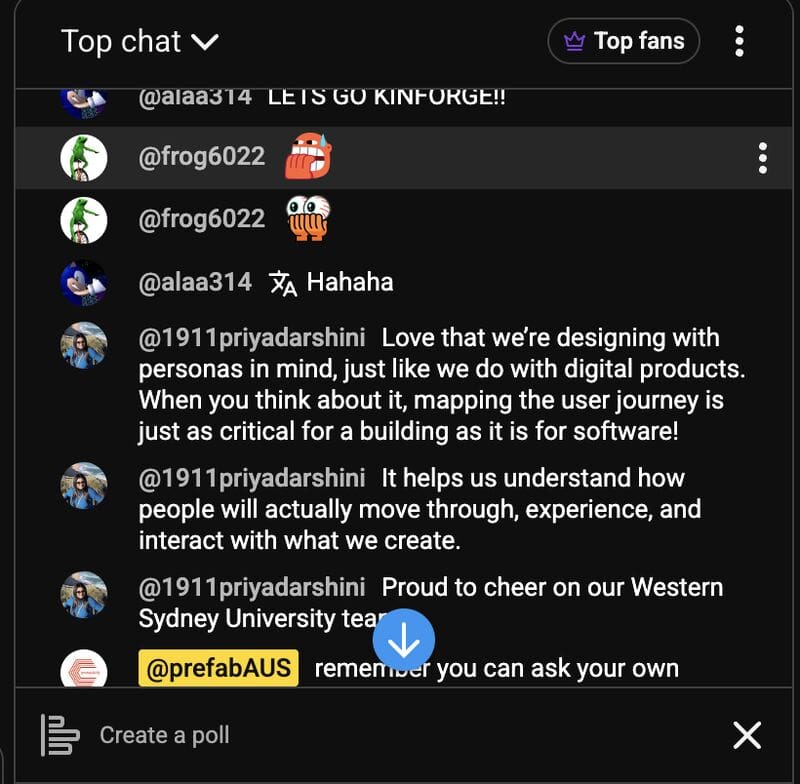
YouTube live chat let viewers respond as the presentations unfolded, support the teams and add their own questions.
At the end of the program, viewers were invited to vote in a live poll for the People’s Choice Award. Kinforge from Western Sydney University was later announced as the People’s Choice winner.
The poll gave the online audience a clear role in the event.
The result
Live Access Now, a Useful Recording Afterwards
The final broadcast connected three student teams with the Melbourne hosts and gave a wider audience direct access to the finalist presentations.
Viewers could follow the projects, join the conversation and vote from wherever they were. Nobody needed to bring every presenter, judge and supporter into the same room.
The livestream was also recorded and remains available on the prefabAUS YouTube channel. prefabAUS can share it after the event, while future students can see how the finalist presentations work before deciding whether to enter the competition.
What this project shows
Planning a broadcast with remote presenters
The presenters used Zoom to contribute to the production, while the audience watched on YouTube. Planning those two experiences together meant checking what speakers needed to present and how viewers would follow the event and take part.
For a similar event, allow rehearsal time to test remote audio, presentation playback and handovers. Decide how viewers will access the broadcast, ask questions and vote, and how the recording will be shared afterwards.
Planning a Live Event With Remote Presenters?
We can bring studio hosts, remote speakers, presentations, audience interaction and recording together in one organised broadcast.
