Rubicon Outdoor School wanted visiting schools and their communities to understand that its programs are much more than time away from the classroom. They are carefully planned learning experiences, taught by qualified educators and connected to the Victorian Curriculum.
Dream Engine filmed at Rubicon’s Thornton and Nayook campuses in rural Victoria, combining interviews with students and educators with engaging footage of practical outdoor activities. The finished promotional video shows how students develop leadership, collaboration, resilience and problem-solving skills by applying their learning in real situations.
Project Snapshot
- Client: Rubicon Outdoor School
- Industry: Government education and outdoor education
- Locations: Thornton and Nayook, Victoria
- Audience: Victorian government secondary schools, educators, students and families
- Services: Promotional video production, interview filming, multi-location activity coverage and post-production
- Deliverable: 4-minute 27-second promotional video
- Purpose: Present Rubicon as a curriculum-aligned school and demonstrate the educational value of learning outdoors
About Rubicon Outdoor School
Rubicon Outdoor School is a multi-campus residential school operated by Victoria’s Department of Education. It works in partnership with government secondary schools to design programs around each visiting cohort, its school culture and its educational objectives.
Natural environments become extensions of the classroom. Programs use fieldwork, journeys and practical challenges to support areas including Geography, Health and Physical Education, Critical and Creative Thinking, Personal and Social Capability, and Outdoor and Environmental Studies.
This connection to the curriculum was central to the video’s story.
The Challenge: Showing a School, Not Just a Camp
Outdoor education is naturally enjoyable and visually exciting. However, that can sometimes obscure the depth of learning taking place.
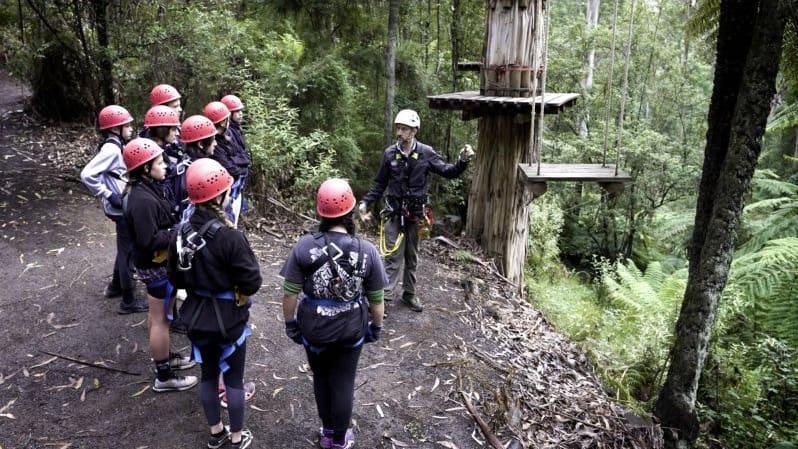
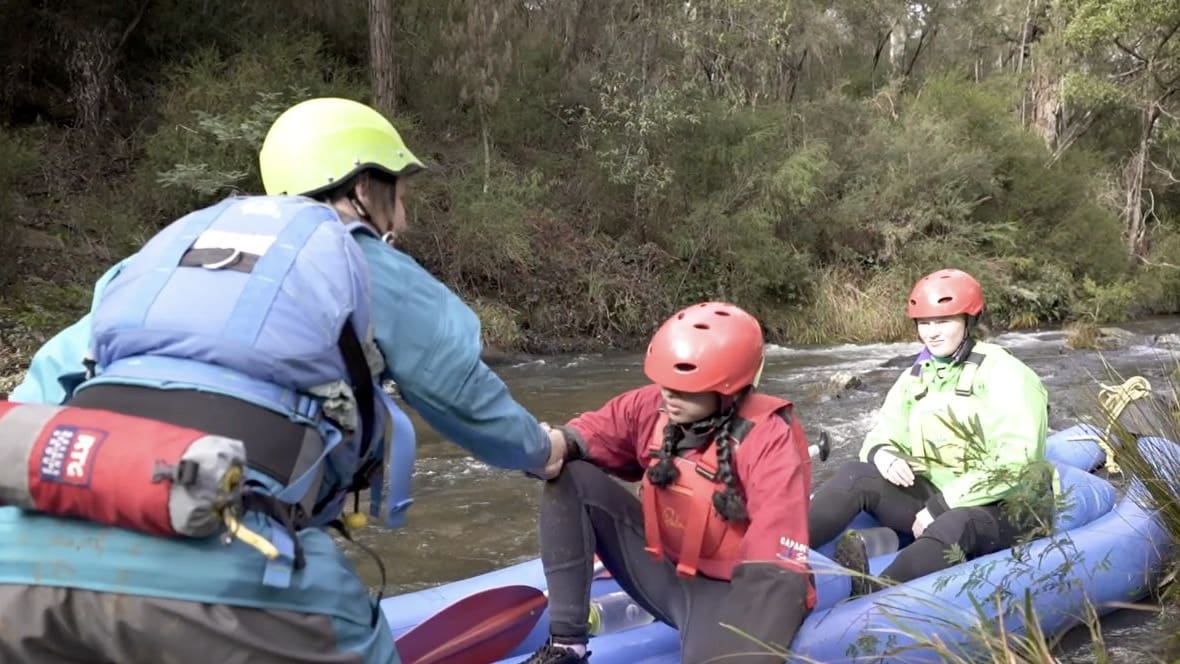
Rubicon needed a promotional video that would retain the energy and appeal of the outdoor experience while clearly explaining its educational purpose. Viewers needed to see that activities such as navigation, camping, caving and high ropes are not recreational extras. They are carefully selected teaching contexts in which students practise communication, teamwork, decision-making and leadership.
The video also needed to bring together interviews and activities filmed across two rural campuses, creating one coherent story about Rubicon’s approach.
Building the Story Around Learning by Doing
The film’s central idea is learning by doing.
Rubicon staff and visiting educators explain how programs are developed with students’ home schools and connected to learning already taking place in the classroom. Student interviews then provide an authentic account of what the experience feels like.
By alternating these interviews with activity footage, the film moves naturally between educational explanation and real-world demonstration. Rather than asking viewers to accept broad claims about confidence or collaboration, it shows students practising those qualities.
Aerial views establish the rural environments, while closer observational footage places the audience alongside students as they respond to unfamiliar situations.
Making Practical Learning Visible
The activity sequences were chosen for what they reveal about the learning process.
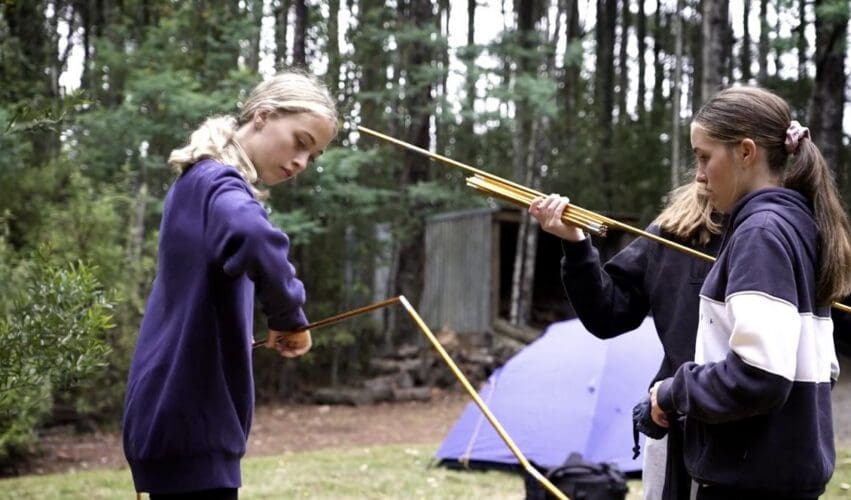
Students navigate using maps and walkie-talkies, requiring them to communicate and make decisions as a group. At a bush campsite, a student describes learning to put up a tent and experiencing that environment for the first time. Caving presents physical and mental challenges, while the high ropes course shows problem-solving, encouragement and peer support in action.
Safety is presented as the foundation that allows students to participate confidently. Challenge remains purposeful and supported, giving students opportunities to try unfamiliar things without reducing the experience to spectacle.
These scenes also keep the film visually engaging. The pace and variety of the footage capture the enjoyment of outdoor learning, while the interviews give each activity a clear educational context.
Authentic Student and Educator Perspectives
Student voices bring immediacy to the film. They speak about concentrating differently outside the classroom, learning new practical skills and enjoying activities they had not previously experienced.
The educators provide the broader perspective. They explain how outdoor education can be an integral part of curriculum delivery and describe the changes they observe as students become more independent, engaged and willing to support one another.
Together, these perspectives make the film feel credible and grounded. The benefits are explained by the people delivering the programs and demonstrated by the students participating in them.
Representing Two Rural Campuses
Filming at both Thornton and Nayook allowed the video to represent Rubicon as one school operating across two distinctive outdoor environments.
The locations contribute more than scenery. They help audiences understand why outdoor learning can create experiences that are difficult to reproduce in a conventional classroom. Wide landscape and campus footage establishes context, while the activity coverage shows how students engage directly with those environments.
Recurring themes of challenge, teamwork and reflection connect the two campuses into a unified story.
The Result
The completed promotional video clearly answers three important questions:
- What is Rubicon Outdoor School?
- How do its programs connect with classroom learning?
- What do students experience and practise while attending?
The film positions Rubicon as an educational partner for Victorian government secondary schools, rather than simply a destination for a school camp.
It gives Rubicon an engaging communication asset that can support its website, presentations and conversations with prospective partner schools. Most importantly, it captures both sides of the experience: the excitement students feel while participating and the serious educational purpose behind each activity.
Why This Approach Works for Education Organisations
Education programs can be difficult to understand until audiences see students and teachers experiencing them firsthand. Combining curriculum information, authentic interviews and observational footage allows a promotional video to communicate both purpose and emotion.
This project demonstrates how thoughtful education video production can make an unfamiliar learning model clear, credible and engaging.
Planning a Promotional Video for a School?
Dream Engine produces promotional videos for schools, universities, government departments and education organisations across Australia.
Our promotional video production process combines clear messaging, authentic interviews and engaging location footage to help audiences understand what makes an organisation distinctive. Contact Dream Engine to discuss your education video project.

Ryan Spanger is the founder and managing director of Dream Engine, a Melbourne video production company established in 2002. Over the past two decades, he’s produced hundreds of videos for businesses, government departments, universities and healthcare organisations across Australia. Ryan specialises in helping organisations explain complex ideas through clear, engaging video content, with particular experience in corporate communications, training and education.