Marketing with Augmented Reality
Video marketing technology changes quickly, but only a small percentage of new tools actually earn a place in a serious marketing mix. Augmented Reality is one of the few that has moved beyond novelty and into everyday use.
AR is now accessible to anyone with a smartphone. It lives inside platforms people already use every day, especially social media. That makes it less about future tech and more about how brands create moments of interaction in the present.
For businesses, the question is no longer whether AR exists. It is whether it can support a clearer message, a stronger experience, or a more memorable interaction with an audience.

What is augmented reality?
Augmented Reality overlays digital elements onto the real world through a device such as a smartphone or tablet. Instead of replacing reality, it adds to it.
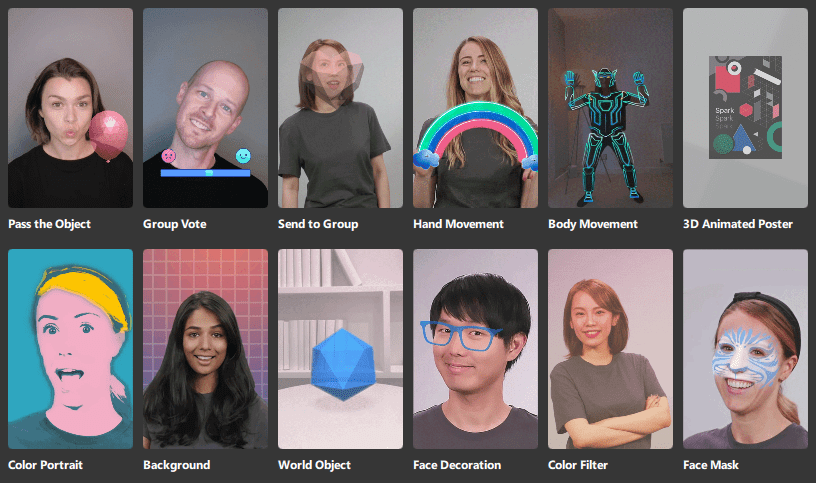
Those digital elements can include animated graphics, text, 2D and 3D objects, video, or interactive elements that respond to movement, position, or user input.
In practical terms, AR allows someone to point their camera at the world around them and see additional information or visuals layered into the scene.
Why AR has become a practical marketing tool
AR has grown quickly because it fits neatly into existing behaviour. People already use their phones to explore, share, and communicate. AR simply builds on that.
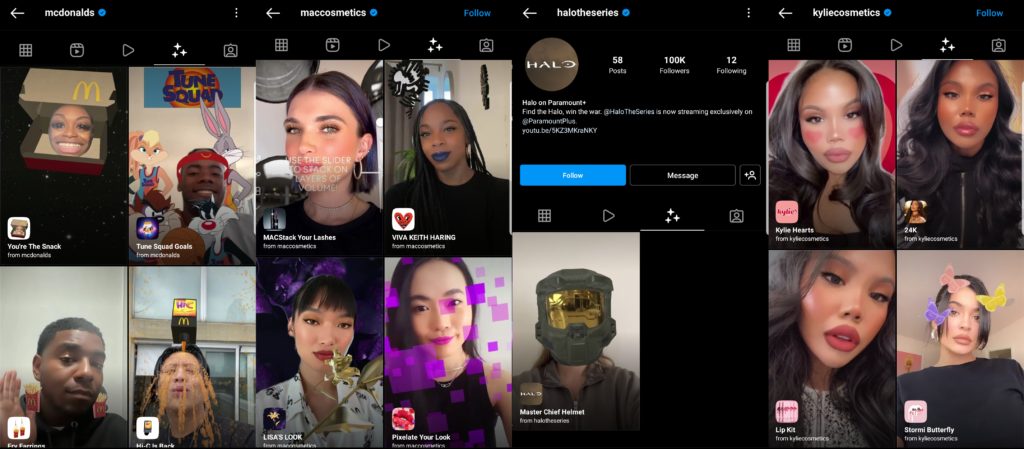
Most major social platforms now support AR experiences, often referred to as filters. Brands can create custom filters that live inside platforms like Instagram, allowing users to interact with them without downloading anything new.
This creates a low-friction way for audiences to engage with a brand, often through play, curiosity, or exploration rather than direct promotion.
Common types of AR experiences for marketing
There are several forms of AR that businesses use, each suited to different goals and products.
Face-based AR
Face filters are widely used in industries like cosmetics, fashion, and lifestyle. They allow users to try products virtually, experiment with variations, and share the experience with others.
From a marketing perspective, this encourages interaction, repeat use, and organic sharing, all within the platform where the audience already spends time.
Image tracking
Image tracking allows a specific image to trigger an AR experience. When the camera recognises the image, digital elements appear over it in real time.
This can be used to add animation, information, or interactive layers to packaging, printed materials, signage, or physical products. It works well when you want to extend a static asset into something more engaging.
World-based AR objects
World-based AR allows users to place a digital object into their physical environment. This is often used for 3D product visualisation.
A user can place a product on a desk, floor, or other flat surface and move around it to inspect scale, form, and detail. Unlike image tracking, this does not rely on a specific marker or image.
This approach is useful when helping customers understand products that are large, configurable, or difficult to view in person.
Using AR as part of a wider video and content strategy
AR works best when it supports a clear idea. On its own, it can attract attention. Combined with video, animation, and storytelling, it can deepen understanding and engagement.
For example, AR can extend a campaign video, add an interactive layer to a product launch, or help explain a concept that is hard to visualise through traditional formats.
The key is to treat AR as another communication tool rather than a standalone trick.
Is AR right for your business?
AR is not suitable for every message. It works best when there is something to explore, reveal, or experience in context.
If your audience would benefit from seeing how something works, fits, changes, or behaves, AR may be worth considering. If the message is simple and informational, video alone is often enough.
If you are curious about how augmented reality could support your marketing or video content, get in touch and we can help you assess whether it makes sense for your goals.
Marketing with Augmented Reality – Frequently Asked Questions
What is augmented reality in marketing?
Augmented reality (AR) overlays digital elements onto the real world through a device such as a smartphone. In marketing, AR is often used to create interactive experiences that help people explore a product, understand an idea, or engage with a campaign in a more memorable way.
Do people need an app to use AR?
Often, no. Many AR experiences run inside platforms people already use, such as Instagram, Snapchat, or TikTok. Web-based AR is also possible in some cases, where users can access an experience through a link without downloading an app.
What are the most common types of AR experiences?
Common types include face-based filters, image tracking (where an image triggers an overlay), and world-based AR objects that can be placed into a real environment through the camera.
What kinds of businesses benefit most from AR?
AR tends to work best for products or services that are visual, configurable, or easier to understand through interaction. It is commonly used for product demos, packaging experiences, campaign activations, and visualising items in a real environment.
Is AR worth it if our audience is not very tech-focused?
It can be, as long as the experience is simple to access and supports a clear purpose. AR works best when it removes friction for the audience, rather than adding complexity.
How do you make sure an AR campaign is not just a gimmick?
The key is to start with the message and the outcome. AR should support a specific goal, such as helping people understand a product, increasing engagement, or adding an interactive layer to a campaign. If AR does not improve the experience, it is usually better to use simpler content formats.
Can AR be combined with video and animation?
Yes. AR often works best as part of a broader content strategy. It can extend a campaign video, add interactive layers to animated content, or support product and training communication where visual context matters.

Ryan Spanger is the founder and managing director of Dream Engine, a Melbourne-based video production company established in 2002. With more than two decades of experience, Ryan has helped leading Australian businesses, government departments, and non-profits communicate their message with clarity and impact through video. He’s known for his strategic approach, reliable process, and commitment to producing videos that deliver measurable results.