 03 8678 0316

In this guide
Video Content Marketing: The Fundamentals
Video can help businesses explain what they do, answer customer questions and build trust. A useful video content marketing plan starts with the audience, the information they need and the action you want them to take.
Our video marketing service can help plan and produce content around those questions. If you are planning a video content marketing strategy for your business, use these fundamentals to guide what you make, where you share it and how you measure the results.
Make content your audience will want to watch
The first step is creating videos your audience will find valuable. This sounds simple yet many videos are still made without thinking clearly about why someone would watch. Ask yourself what your ideal customer cares about and what they need help with.
People respond to clarity, relevance and simplicity. Teaching something useful or showing how your team works gives viewers a reason to watch beyond a sales message. If you want more details on improving watchability, you can read our post on how to make your videos more engaging.
Once you know the type of videos your audience appreciates, commit to publishing them regularly. People return when they know what to expect.
Share your videos where your audience actually is
Plan where each video will be used before filming. Depending on your audience and purpose, that might include YouTube, your website, LinkedIn, newsletters or targeted ads. Allow for the different lengths, formats and supporting copy each channel needs.
If you want to compare different hosting options, here is more detail on professional hosting versus YouTube.
Embedding a relevant video in a useful article can give visitors more detail and a clear next step. Choose the page and placement to suit the viewer’s question, then measure whether people watch the video and take the intended action.
Encourage action and guide what happens next
When someone finishes watching your video, they need a clear next step. Many videos simply end and leave the viewer to figure out what to do. A direct, simple call to action works best. Invite your viewer to contact your team, download a guide or book a consultation.
If you have useful follow-up material, invite viewers to subscribe or request it. Explain what they will receive and ask for permission to stay in touch.
Measure whether your videos are working
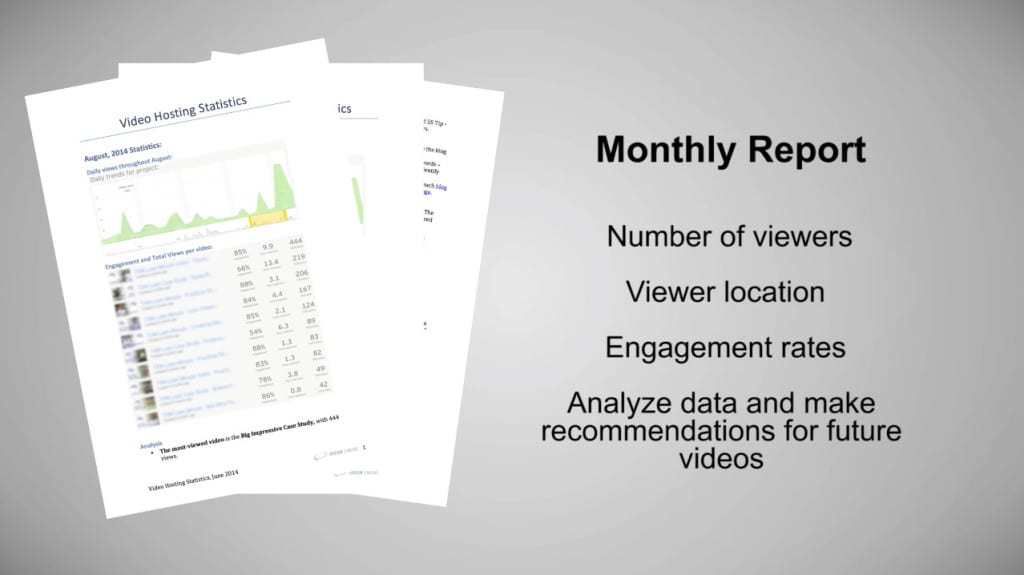
Use the analytics available on your hosting platform to review watch time, drop-off points and clicks. Compare them with the video’s purpose and the action viewers take afterwards. A drop in viewing can suggest where to investigate, but it does not explain the cause on its own. Test a clearer opening, a shorter edit or a different placement, then compare the results.


An advanced tip for taking your video marketing further
Some video hosting platforms can pass viewing activity to a compatible CRM or email platform. Identifying a viewer usually depends on a form submission, a tagged email link or another supported identification method. It does not reveal the identity of every visitor. Check the available integration, explain how you use the data and make follow-up relevant to what the person requested.
Seven practical rules for video content marketing that works
- Create engaging content
- Publish consistently
- Share your content across the right platforms
- Include clear calls to action
- Offer useful follow-up content with a clear opt-in
- Review the analytics
- Consider a CRM integration where it supports useful follow-up
For a more detailed framework, read our video content marketing guide.
If you’d like to talk about developing a video content marketing strategy for your business, you can contact us here.
A practical content plan
Video content marketing: frequently asked questions
Connect the content, distribution and next step.
What should a video content marketing plan begin with?
Begin with the audience, the question or information they need and the action you want them to take. Those decisions guide the subject, format, distribution and measures of success.
Where should we share a marketing video?
Choose channels that fit the audience and purpose, such as your website, YouTube, LinkedIn, newsletters or advertising. Agree on placement and the required versions before filming.
What should happen when the video ends?
Give the viewer a clear next step that matches the video’s purpose. That might be contacting the team, reading relevant information or requesting useful follow-up material.
What should we learn from viewing data?
Review watch time, drop-off points and clicks alongside what viewers do afterwards. A change suggests something to investigate; it does not establish the cause by itself. Compare the edit, opening, placement and distribution when planning a test.