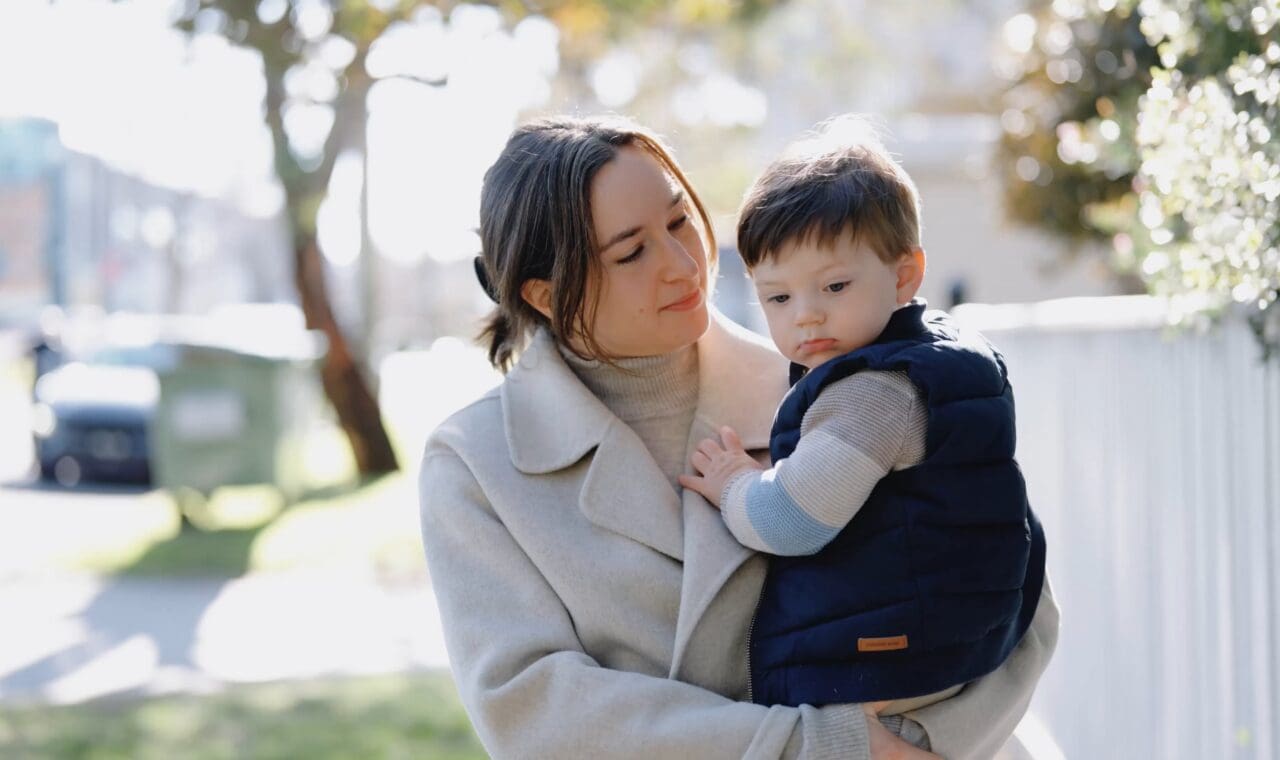
Choosing a childcare centre or kinder is an important decision for a family. Parents want to see where their child would spend the day, who would care for them and what daily life looks like. Video can offer an early introduction, helping families compare their options and get a sense of whether a centre feels right for their child.
Dream Engine produces centre tours, staff interviews and family stories for childcare providers, kinders and organisations supporting young families. Based in Prahran, we work across Melbourne and regional Victoria, planning each film around what families need to know and what your team can comfortably accommodate.
Watch examples of our work with children and families
What should a childcare or kinder video show?
Start with the questions your team hears on tours and in enquiry calls. Those questions give the film a useful structure. Depending on your centre, that might include:
- The arrival experience. Where families enter, who greets them and how children settle into the day.
- Indoor and outdoor spaces. Activity areas, quiet corners, gardens and places for play, with enough context to show how they connect.
- The people caring for children. A short introduction from the director or room staff, explained in their own words.
- Everyday routines. Group activities, mealtimes and transitions, where filming is appropriate and permissions are in place.
- The next step. How to book a visit, ask a question or enquire about a place.
Families can watch at their own pace, return to details that matter to them and share the film with a partner or carer. It gives them a starting point for comparing centres and asking more specific questions when they get in touch or visit.
Choose the format around the job it needs to do
A centre walkthrough
A walkthrough helps families understand the building and grounds. It can follow a staff member around the centre or use carefully ordered footage with simple labels. For a new or refurbished centre, it is a way to introduce the facilities to the local community.
Plan the route before filming. A sequence that moves from the entrance to indoor spaces and then outside is easier to follow than a collection of attractive shots with no connection between them. Our guide to walkthrough and tour videos explains this approach in more detail.
Staff introductions and parent stories
A director can explain how the team helps children settle in, communicates with families or approaches a typical day. We prepare interview questions around those topics, so staff can speak naturally without memorising a script.
Parent stories bring another perspective. Ask about a specific experience, such as the first few weeks or communication with staff. Families should be free to choose whether to participate and speak honestly about their experience.
Short clips for enquiries, open days and social media
A longer centre film can provide material for shorter edits, provided those versions are planned before the shoot. One clip might introduce the outdoor space; another might answer a common question. Each needs enough context to make sense on its own.
Examples of our work with children and families
These projects show different ways to film children’s activities, introduce a new facility and explain a service through families’ experiences. The school and council examples offer useful approaches for childcare and kinder projects.
Showing children’s activities
This short film brings together hands-on activities, painting, outdoor play and interactions with staff. Close views of what children are doing sit alongside shots of the spaces they use.
For a childcare or kinder film, this approach can help show the experience of being there. We plan appropriate activities with your team and leave room for children to take part at their own pace.
Introducing a new facility: Barayip Primary School
We produced this walkthrough to introduce Barayip Primary School’s new Tarneit campus to local families. The film shows the rooms, shared spaces and how the facilities fit together. A second video focuses on the exterior.
A childcare centre or kinder opening new premises faces a similar communication task: helping families see what has been built and picture a visit. Read the full Barayip walkthrough case study.
Hearing from families: maternal and child health
For the City of Boroondara, we produced a film in which parents and carers describe their experiences of maternal and child health services. Their accounts sit alongside footage of the settings families visit.
This is a council health service rather than a childcare centre. The relevant approach is letting families explain their experience in their own words, while showing the people and places they are talking about. A parent interview for a kinder or childcare provider can use the same approach. Read the maternal and child health video case study.
Plan filming around children and the centre’s day
The filming plan needs to work for your staff and families. We agree which rooms and activities can be filmed, when staff are available for interviews and which parts of the day need to stay undisturbed. A quiet time for interviews may be different from the best time to show an outdoor activity.
Children’s participation should be comfortable and voluntary. We work with your team to recognise when a child needs space or does not want to take part, and adjust the filming accordingly. Our camera operators hold current Victorian Working With Children Checks and follow the centre’s visitor, supervision and child-safety procedures.
Make the finished videos useful
Before filming, decide where each version will go. An introductory film on your website can help families get to know the centre while they are considering their options. A centre tour can sit beside the booking form or be shared in an enquiry response. Shorter clips can introduce individual spaces or staff members on social media. Captions help people follow the film with the sound off.
Keep information that changes often, such as vacancies, fees and session times, on an easily updated webpage. The video can direct families there. When staff or facilities change, review the film so it still represents the centre accurately.
We agree the main film, shorter edits, captions and any translated versions in the brief. Your nominated reviewer checks names, service information and permissions before the final files are approved.
Questions about childcare and kinder videos
Can we make a video without filming children?
Yes. A tour can focus on the rooms, outdoor spaces and staff, with filming arranged when children are not present. We still check backgrounds, displayed photographs and records, and agree the centre’s filming requirements before the shoot.
How long should our centre video be?
It depends on the purpose. Around one to two minutes is a useful starting point for an introduction; a guided tour may need longer. A short social clip should cover one clear idea. We recommend a length once we know what families need to see.
Can one shoot cover more than one video?
Often, yes. A planned shoot can capture a centre tour, staff interviews and footage for shorter clips. The schedule needs to allow time for each, and vertical versions may need different framing. We agree the deliverables before filming.
What affects the cost?
The main factors are filming time, the number of locations and interviews, editing, captions, translations and the versions required. Tell us what the video needs to do and where you will use it, and we can recommend a scope. Our video production cost guide explains what goes into a quote.
Planning a project for a primary school, secondary school or university? See our dedicated school and university video service.
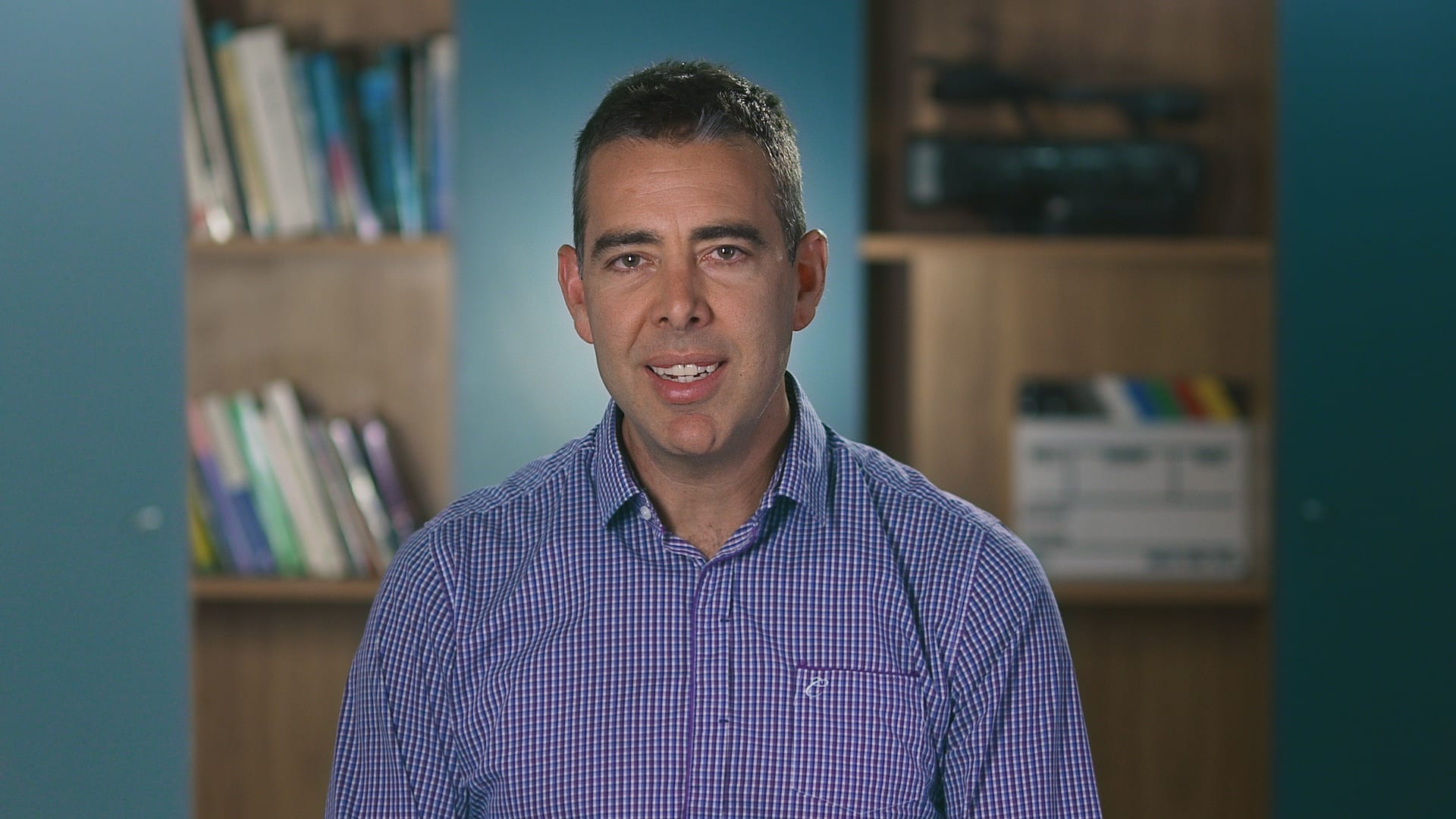
Ryan Spanger is the founder and managing director of Dream Engine, a Melbourne video production company established in 2002. Over the past two decades, he’s produced hundreds of videos for businesses, government departments, universities and healthcare organisations across Australia. Ryan specialises in helping organisations explain complex ideas through clear, engaging video content, with particular experience in corporate communications, training and education.