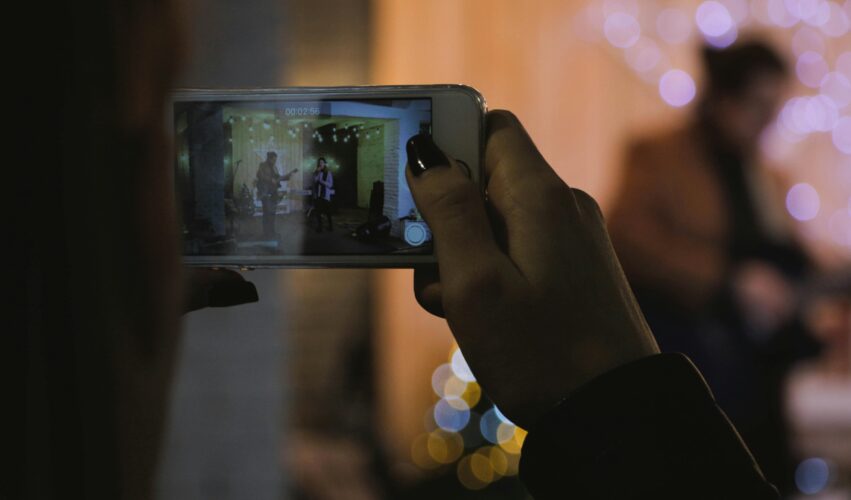
Some clients need to capture their own footage rather than work with our videographer. Sometimes it’s because the moment is happening right now, or because you’re already on site. This guide will help you capture material that looks better, sounds better and gives us more flexibility in the edit.
Your Footage Can Look Great With a Few Simple Steps
This guide helps you record clean, stable and usable video, even on a phone. If you’re filming something important and want quick advice, reach out. And if you’d prefer a professional crew to take care of the entire process, we can help.
Record in the Highest Quality
Set your phone or camera to record in 4K when available. If not, film in 1080p. Higher resolution gives us more detail to work with in the edit.
Film in Landscape Orientation
For a widescreen project, hold your phone horizontally. A vertical social video needs different framing, so confirm the intended format with us before filming. Keep the orientation consistent within each shot.
Keep the Camera Steady
Shaky footage is one of the most common issues. Try:
- Holding your phone with two hands
- Leaning on a wall or desk
- Resting your elbows against your body
- Using a small tripod if you have one
Hold Each Shot for 5 to 10 Seconds
Most people move the camera too quickly. Hold each shot steady for a slow count of five. It will feel slow, but it gives us much more usable material.
Capture a Mix of Shots
Good videos come from variety. Aim to film:
- Wide shots to show the environment
- Medium shots for people or actions
- Close-ups of details like hands, tools or screens
Use Good Lighting
Face your subject toward a source of light. Avoid bright windows behind them or harsh overhead lights. Soft, even lighting works best.
Record Clean Audio
If you’re filming someone speaking, try to:
- Move closer to them
- Film in a quiet space
- Avoid fans, machinery or traffic
Think About the Story
Before filming, consider what will help someone understand what is happening:
- Where you are
- Who is involved
- What is happening
- Which details viewers need to see
If You’re Filming an Event
For presentations or training sessions:
- Keep the camera steady
- Avoid zooming in digitally
- Capture audience reactions
- Record close-ups of hands, notes or demonstrations
- Film wide shots of the venue
Sending Us Your Footage
When you’re ready to deliver your files:
- Send the original camera files at full quality, without converting them or sending reduced-size copies through a messaging app
- Label them clearly if possible
- Upload everything to the shared folder we provide
Related Services
Frequently Asked Questions
What resolution should I film in?
Film in 4K when possible. Otherwise, use 1080p.
How long should each shot be?
Aim for five to ten seconds per shot so we have enough material to edit.
Should I film in landscape or portrait?
Use landscape for a widescreen project unless we request vertical footage. Confirm the intended use before recording, especially if the video needs to work in both formats.
How can I stabilise my camera?
Use two hands, lean against a stable surface or use a small tripod.
How do I capture better audio?
Move closer to the person speaking and avoid noisy locations.
How should I deliver my footage?
Upload the original camera files to the shared folder we provide. Avoid exporting smaller copies or sending them through an app that reduces quality. Your camera’s normal recording format is fine; there is no need to convert it to an uncompressed format.
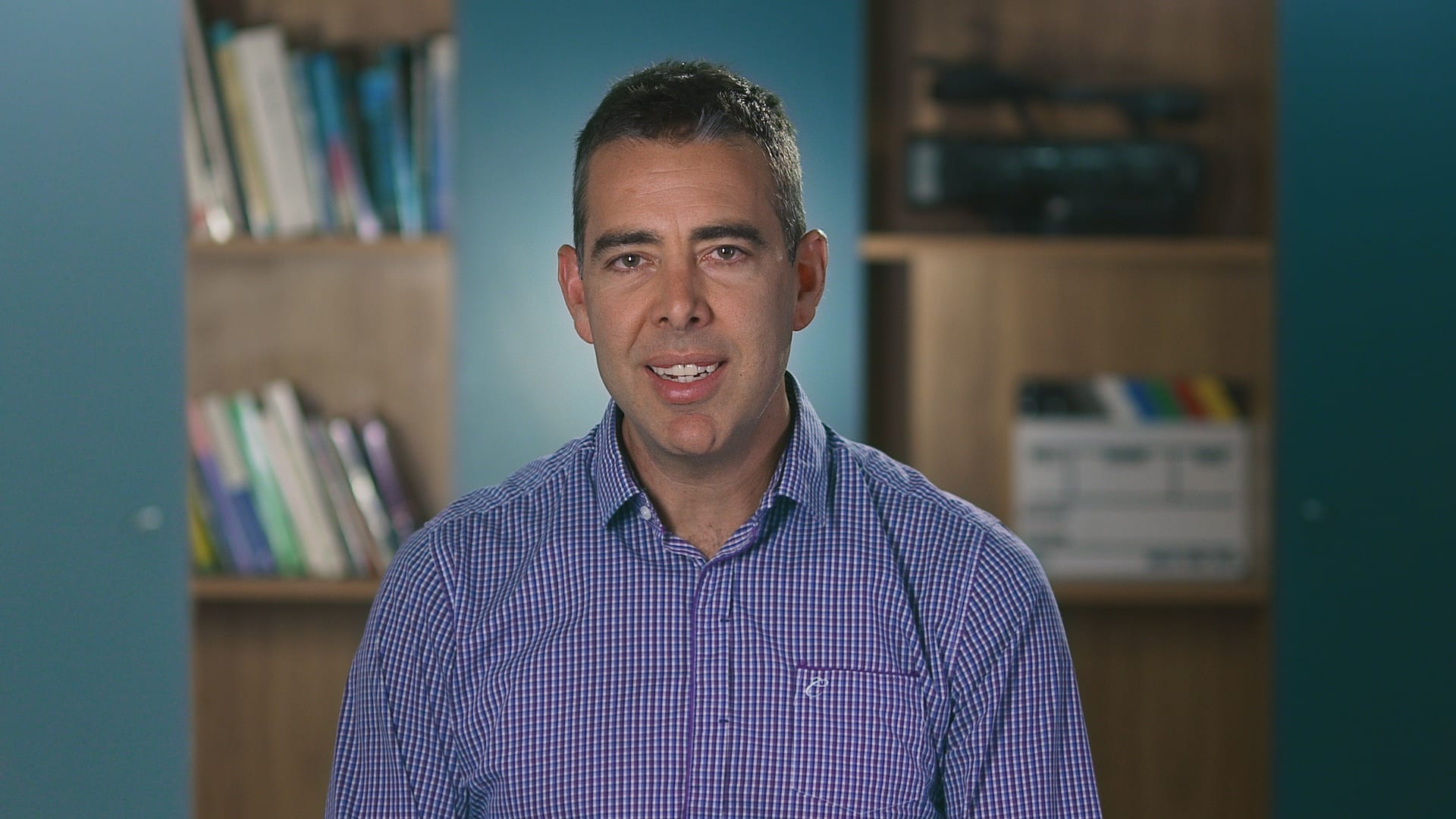
Ryan Spanger is the founder and managing director of Dream Engine, a Melbourne video production company established in 2002. Over the past two decades, he’s produced hundreds of videos for businesses, government departments, universities and healthcare organisations across Australia. Ryan specialises in helping organisations explain complex ideas through clear, engaging video content, with particular experience in corporate communications, training and education.