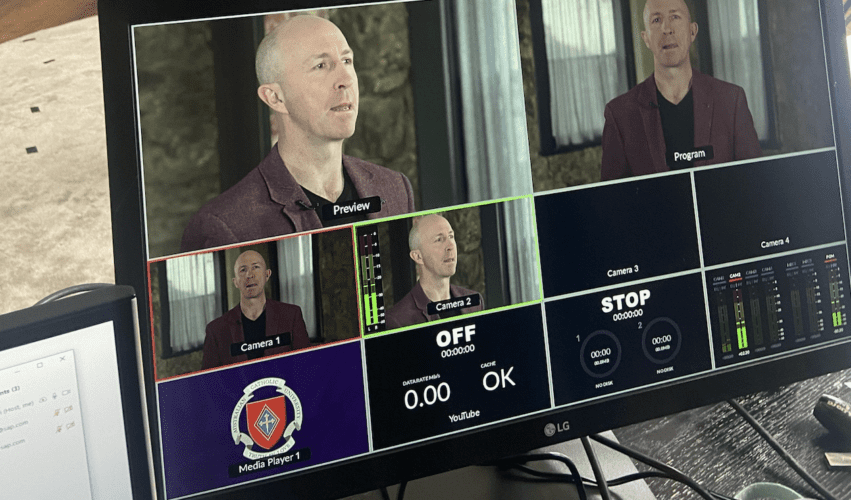
Organisations use webinars to explain a new process, discuss a change in direction or share ideas people need to apply at work. The format gives presenters time to explain the material and participants a chance to ask questions.
Dream Engine helps Melbourne organisations run webinars that are structured, interactive, and easy to follow. We help plan the flow, support presenters, and design audience participation to keep people focused and contributing at the right moments.
If you want a webinar that helps people understand what’s being asked of them and leaves them clearer than they arrived, we can help.
Talk to Dream Engine about your webinar
Contact us to discuss your webinar goals, audience, and format.
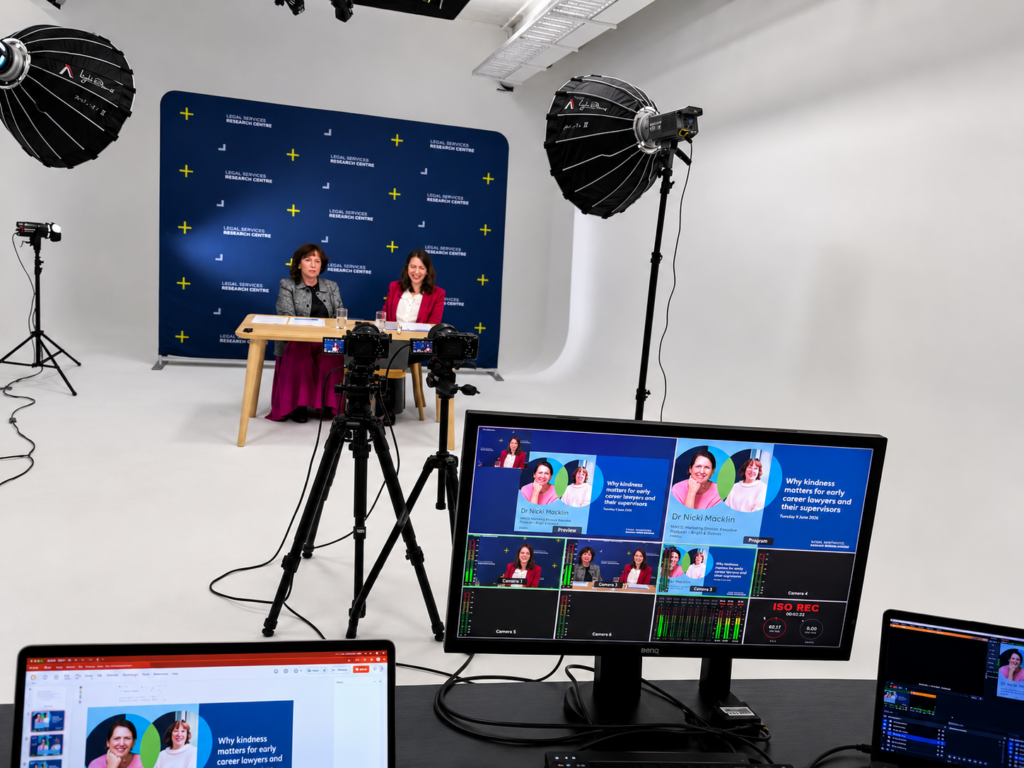
Webinars designed for participation and understanding
Webinars often fail because attention is limited. People are watching from a desk, surrounded by distractions. Without structure and participation, the risk is that they tune out.
We design webinars around clear communication and participation. The pacing, transitions, and interaction points are planned so people can follow the material, stay engaged, and contribute without the session becoming messy or unfocused.
This approach is particularly well-suited to training, internal communication, leadership updates, and professional discussions where the audience needs to understand the information and ask questions.
Audience participation and engagement
Audience participation lets presenters hear what people have understood and where they need more explanation. The type of interaction should suit the session and the people attending.
We plan audience participation based on the session’s purpose and how comfortable people are with contributing. Engagement is about keeping attention focused and inviting contribution at the right moments.
Read more about audience participation in this webinar we produced for PACT.
Easy to join
Some sessions benefit from simple, low-pressure interaction. Chat prompts and short responses help people stay engaged without putting them on the spot. This keeps attention high and gives presenters a clear sense of whether the audience is following along.
Structured interaction
For training and information-heavy sessions, structured interaction plays a bigger role. Polls, quizzes, and check-in questions can confirm understanding as you go. This helps surface confusion early and keeps the pace aligned with the audience, rather than pushing through material too quickly.
Guided contribution
Moderated Q&A and shared handouts help attendees put the information into practice. Questions can be collected, prioritised, and addressed without disrupting the flow. Supporting materials give attendees something to refer back to after the session, so they can use what they’ve learned afterwards.
Voice and video participation
In some webinars, direct voice or video contribution is useful. Selected participants are invited to contribute at specific points to keep the discussion focused and productive, rather than turning into an open forum.
Live panel discussions across multiple locations
Webinars are well-suited to panel-style discussions where contributors are joining from different locations. This format works for leadership discussions, subject-matter panels, and internal conversations where multiple perspectives add value.
Rather than recreating a stage-based panel, we design these sessions as structured, moderated conversations. Each speaker has a clear role, the discussion flow is planned in advance, and the session is facilitated so the conversation stays easy to follow.
Moderated conversations that stay clear
Panel discussions work best when they are guided. We manage turn-taking, timing, and transitions so speakers can contribute without talking over one another or losing momentum. This keeps the discussion coherent for the audience and ensures key points are not missed.
Speakers joining from different locations
Webinar panels make it easier to bring together contributors from different offices, cities, or home setups. The format helps the audience follow who is speaking, what is being discussed, and what’s important.
Audience engagement during panel sessions
Audience engagement plays an important role in panel-style webinars. Questions can be submitted during the session and addressed at appropriate moments, allowing the discussion to respond to what the audience wants clarified or explored further.
Polls and structured prompts can also shape the discussion, helping the panel focus on the topics attendees most want to discuss.
When webinars are the right format
Webinars are well-suited to situations where you want people to understand something, engage with it, and leave with clear next steps.
- Training and onboarding for staff, contractors, partners, or customers
- Internal communication for policy changes, updates, and operational shifts
- Leadership updates with context and time for questions
- Professional education where interaction improves retention (such as this webinar for VSLB+C)
- Panel discussions where multiple perspectives help people make sense of a topic
Recent webinar results
- PACT: more than 1,000 staff and 12 pre-recorded segments. Of the 203 post-event survey respondents, 89% rated the webinar good or excellent, 96% rated the video content good or excellent, and 95% said they would attend another session.
- VLSB+C: a one-hour CPD webinar with two presenters, more than 250 live attendees, as reported by VLSB+C and an on-demand educational recording.
How Dream Engine supports your webinar
A webinar can have great content and still fall flat if the structure is loose, presenters feel underprepared, or audience participation is unmanaged. Our role is to help you plan and run the session, so it holds attention and stays on track.
Planning and session structure
We help shape the run sheet and session flow so it is easy to follow. This includes the order of segments, where interaction belongs, and how to handle questions without derailing the timeline.
Presenter support
Many presenters are confident in their work but not used to presenting on camera. We provide practical guidance, including how to speak to the audience, handle prompts, and stay calm when questions come in.
Moderation and facilitation
A moderator introduces speakers, watches the timing and groups questions for the discussion. Planning that role in advance gives presenters room to focus on their subject while someone manages the flow of the session.
Webinar production for Melbourne organisations
Dream Engine works with Melbourne organisations that need webinars for training, leadership communication, and professional discussion. We’re used to working with teams spread across locations, and we design engaging webinars that respect people’s time and attention.
We focus on all aspects of the webinar: the structure, the facilitation, the interaction and the design.
Want to discuss your webinar?
Contact Dream Engine and tell us what you’re trying to achieve, who the audience is, and how interactive you want the session to be.
Frequently Asked Questions
What is a webinar, and when is it the right format?
A webinar is a structured online session designed for explanation, participation, and discussion. It is a strong fit for training, internal updates, professional education, and panel conversations where attendees need explanations and time for questions.
How interactive can a webinar be?
Participation can range from simple chat prompts through to polls, quizzes, moderated Q&A, downloadable handouts, and selected voice or video contributions. The best level of interaction depends on the purpose of the session and the audience.
Can webinars include live panel discussions?
Yes. Webinars are a strong format for moderated panel discussions, especially when speakers are joining from different locations. Clear facilitation and managed turn-taking keep the discussion easy to follow.
Can speakers join from different locations?
Yes. We regularly run webinars with speakers joining from different offices or cities. The session is designed so each speaker has clear presence and the audience can follow the conversation without confusion.
How do you manage questions and audience participation during the session?
We plan how questions will be collected and handled, then moderate the session so Q&A adds value without taking over. Participation is guided so it supports the session rather than interrupting it.
Can the webinar be recorded and reused?
Yes. Many organisations reuse webinar recordings for onboarding, internal libraries, or follow-up viewing. We can plan the session so it works live and still holds up as a recording afterwards.
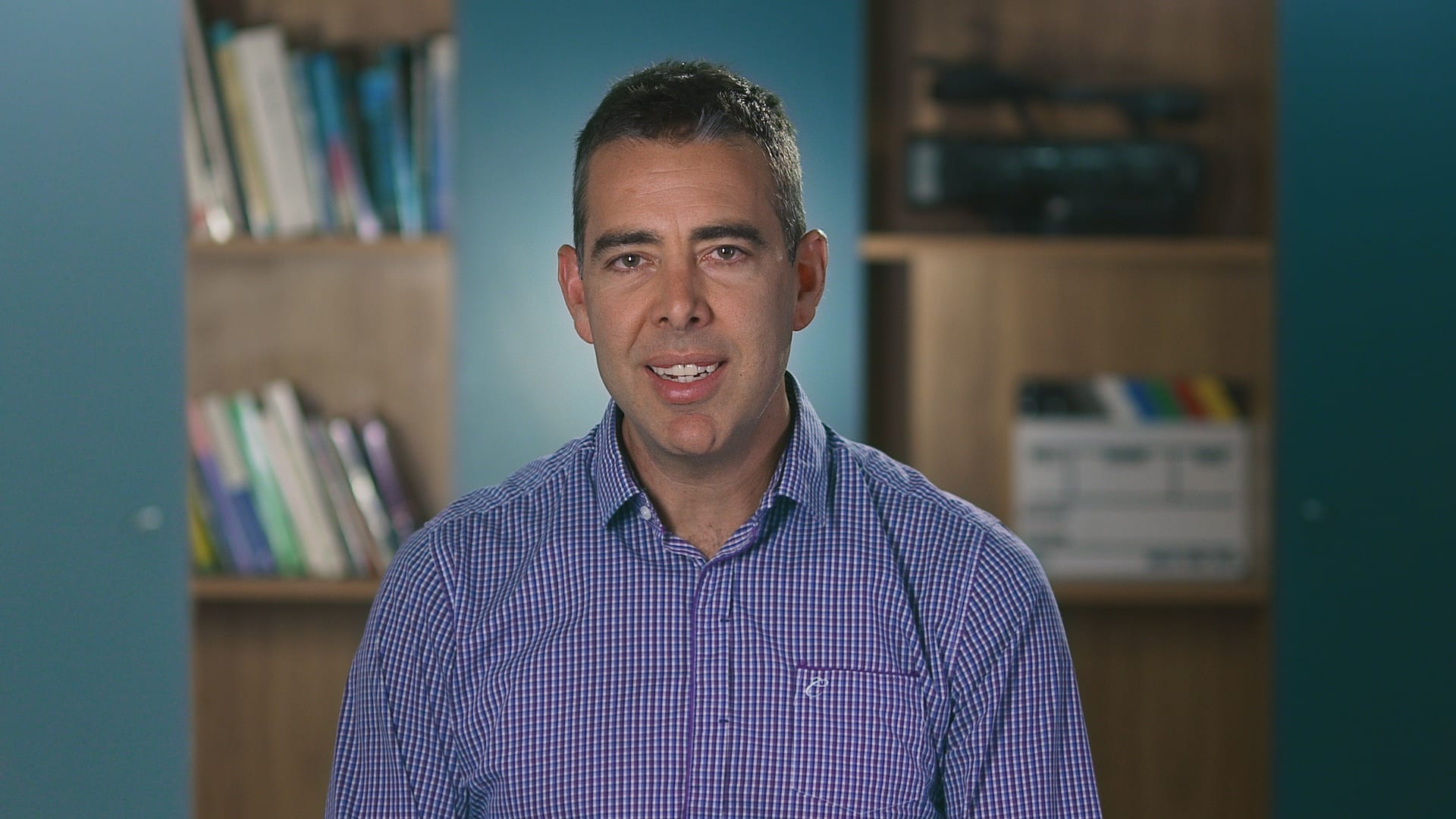
Ryan Spanger is the founder and managing director of Dream Engine, a Melbourne video production company established in 2002. Over the past two decades, he’s produced hundreds of videos for businesses, government departments, universities and healthcare organisations across Australia. Ryan specialises in helping organisations explain complex ideas through clear, engaging video content, with particular experience in corporate communications, training and education.