In this guide
Should your organisation produce video in-house or work with a professional video production company? The right answer depends on the purpose of the video, the level of risk, the skills available internally and how often you need to publish.
For quick internal updates and informal social content, an in-house team can be fast and effective. For high-profile communications, customer stories, training programs, events and campaigns, an experienced production company usually provides stronger creative, technical and project-management support. Many organisations get the best result from a hybrid approach.
In-house video production vs a production company: the short answer
Use in-house production when you need frequent, informal videos made quickly. Use a production company when the video carries commercial, reputational or operational importance. A hybrid model works well when your internal team understands the organisation and creates regular content, while external specialists handle complex or high-stakes work.
| Consideration | In-house production | Production company |
|---|---|---|
| Best suited to | Internal updates, quick announcements and simple social posts | Brand films, customer stories, training, events and major campaigns |
| Speed | Fast when people and equipment are immediately available | Requires briefing and scheduling, supported by a managed process |
| Production quality | Depends on internal skills, equipment and available time | Consistent specialist creative and technical quality |
| Cost structure | Ongoing salaries, equipment, software, training and management | Defined project investment without maintaining a complete internal capability |
| Capacity and risk | Can depend heavily on one or two people | Access to a broader team, backup resources and specialist skills |
What is in-house video production?
In-house video production means your organisation creates video using its own staff, equipment and systems. This may range from a communications manager filming a short smartphone update to a dedicated internal studio with producers, camera operators and editors.
It is most effective when the required format is repeatable, the production risk is low and the organisation publishes often enough to justify maintaining the capability.
Advantages of producing video in-house
- Speed and accessibility: an internal team can respond quickly to announcements, staff communications and emerging social topics.
- Organisational knowledge: staff already understand the subject matter, stakeholders and internal approval process.
- Authenticity: informal content can feel immediate and credible when a highly polished treatment is unnecessary.
- Efficiency for repeatable content: a well-equipped team can produce regular, low-complexity formats without starting a new supplier engagement each time.
Risks and hidden costs of in-house production
Buying a camera does not create a complete production capability. Organisations also need planning, scripting, lighting, sound, directing, editing, graphics, storage, software, maintenance and reliable project management.
- Reliance on one generalist: capacity can disappear when that person is busy, unwell or leaves the organisation.
- Inconsistent brand quality: poor sound, lighting or framing can weaken an otherwise strong message.
- Internal opportunity cost: communications and marketing staff may spend substantial time on production instead of their primary responsibilities.
- Limited specialist skills: animation, complex interviews, multi-camera events and high-end post-production require expertise that may not exist internally.
- Underestimated total cost: salaries, equipment replacement, software, training, insurance, storage and contingency planning all contribute to the real cost.
When should you use a video production company?
External production becomes particularly valuable when the video represents your organisation publicly, must meet a fixed deadline or involves multiple stakeholders and technical requirements.
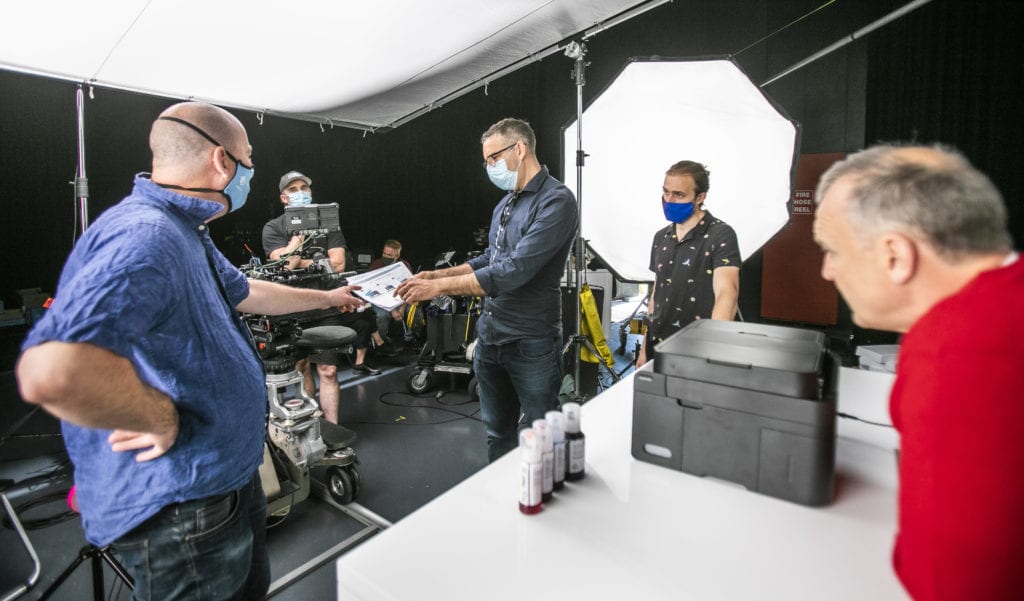
Our corporate video production service explains how we plan and deliver this work. Typical examples include:
- corporate and brand videos
- customer case studies and executive interviews
- recruitment and employer-brand videos
- training, induction and procedural content
- conference coverage and live streaming
- animation and motion graphics
- campaign content that will be used across several channels
Advantages of working with a production company
- A complete team: strategy, producing, directing, camera, sound, editing and graphics can be matched to the project.
- Clearer communication: an external producer can challenge assumptions and shape complex information into a focused story.
- Reliable delivery: established planning, review and backup processes reduce deadline and technical risk.
- Scalable capacity: the crew and equipment can expand or contract according to the production.
- Efficient use of internal staff: your team remains involved in decisions without having to manage every technical detail.
The hybrid model: often the best of both worlds
The choice does not need to be all or nothing. Many organisations create simple, regular content internally and bring in an external production partner for important projects or specialist stages of the work.
For example, an internal team might record staff stories because it has easy access and trusted relationships. A production company can then manage the edit, graphics, sound mix and final delivery. Our video editing service covers this part of the production. Alternatively, an external crew can establish a repeatable format and train the internal team to continue producing simpler episodes.
How to improve a simple in-house video
When a DIY approach is appropriate, a few fundamentals make a substantial difference.
Use soft light from the front
Face a large window or another soft light source. Avoid placing a bright window behind the presenter, which can turn the face into a silhouette.
Keep the framing intentional
Position the presenter’s eyes roughly two-thirds of the way up the frame. Use a clean background and remove distracting objects before recording.
Prioritise clear audio
Move the microphone closer, choose a quiet room and turn off fans, notifications and other noise sources. Record a short test and listen back on headphones before continuing.

Use conversational delivery
Write short sentences and speak as though you are talking to one colleague. If a line feels difficult to say naturally, simplify it.
How to decide which model is right
Before deciding, ask:
- Who will see this video, and what happens if it looks or sounds unprofessional?
- How long will the content remain in use?
- Does the internal team have the necessary time as well as the equipment?
- Does the project require specialist creative or technical skills?
- Is the deadline fixed?
- Would a hybrid approach reduce cost while protecting quality?
If the content is temporary, informal and low-risk, producing it internally may be sensible. If it represents your brand, supports an important initiative or must perform for several years, professional production is usually the safer investment.
Planning your approach? Start with a video production brief, or talk to Dream Engine about the right production model for your organisation.
Choose a workable production model
In-house video production: frequently asked questions
Compare the work, skills and time available.
Is in-house video production cheaper?
It can be for frequent, simple content, but the true cost includes staff time, equipment, software, training, storage and management. For occasional or specialist projects, outsourcing may be more economical.
Can a smartphone produce a professional-looking video?
Yes, particularly for simple updates. Good lighting, close and clear audio, stable framing and concise delivery are more important than using an expensive camera.
What videos are best produced in-house?
Quick internal messages, informal announcements and repeatable social formats are often suitable when the reputational risk is low.
When should we hire a professional production company?
Use a professional team when the video is customer-facing, technically complex, deadline-critical or expected to represent the organisation for a long time.
Can an internal team and a production company work together?
Yes. A hybrid model can combine internal subject knowledge and access with external creative, technical and post-production expertise.
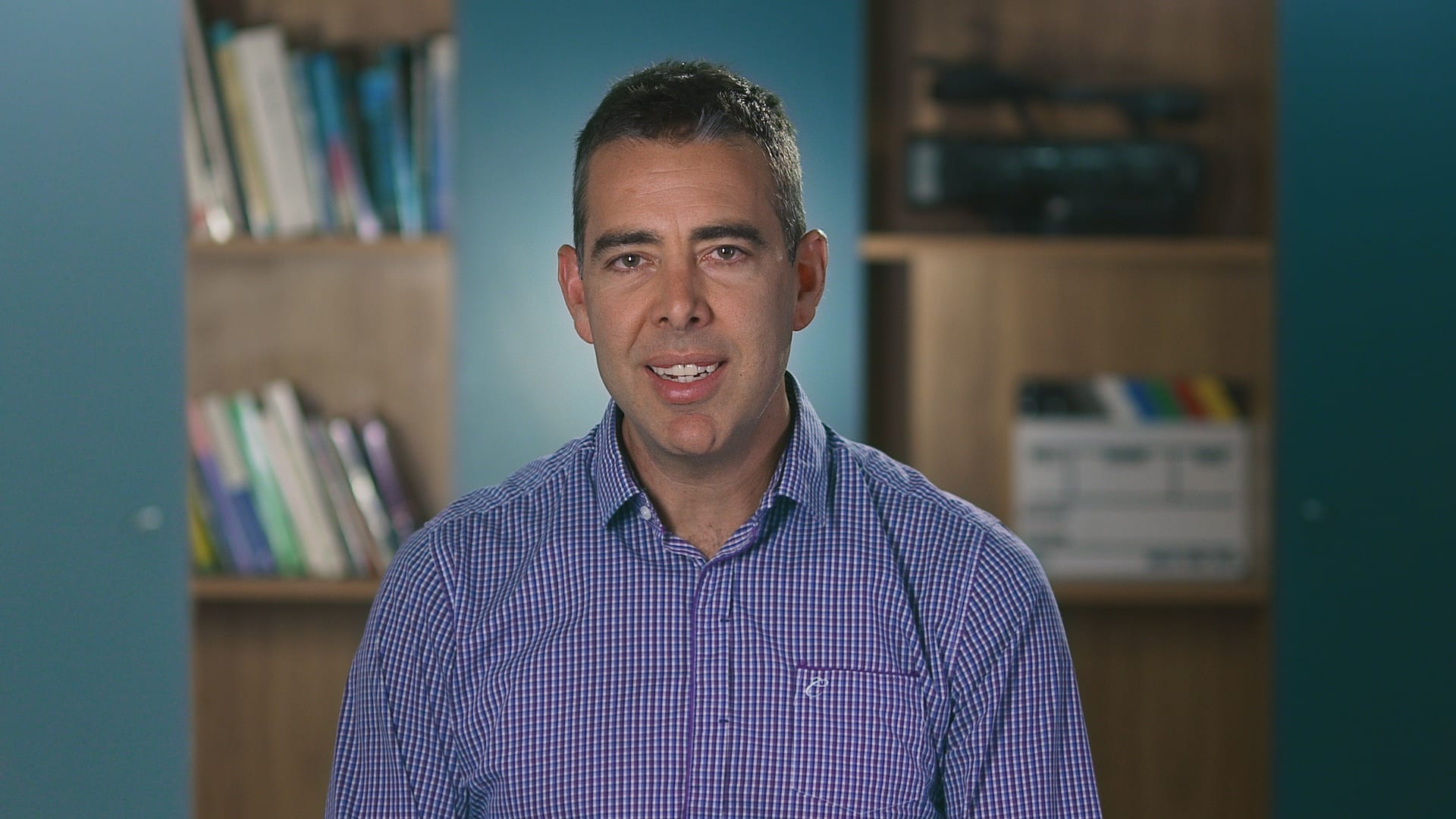
Ryan Spanger is the founder and managing director of Dream Engine, a Melbourne video production company established in 2002. Over the past two decades, he’s produced hundreds of videos for businesses, government departments, universities and healthcare organisations across Australia. Ryan specialises in helping organisations explain complex ideas through clear, engaging video content, with particular experience in corporate communications, training and education.