
Flattering, believable light
For interviews, a soft main light often gives us a flattering starting point. Its direction and the amount of shadow help shape the face.
Video production company in Melbourne, Australia.
Dream Engine uses lighting to create mood, give people and places depth, and guide the viewer’s attention. We plan the look around the story, then build the lighting setup to suit the location and production.

The direction, softness and colour of light affect how a scene feels. What we leave in shadow matters as much as what we light.
A bright, open image can make an interview feel welcoming. A more directional light with deeper shadows can create intimacy or tension. We choose the approach to suit the person, the subject and the feeling the video needs to convey.
We discuss the look with you during planning, then work out the lighting, equipment and crew needed to achieve it.
We consider how the light shapes a face, what the background tells us and where the viewer’s eye goes. The setup also needs to hold together across different camera angles and takes.
For interviews, a soft main light often gives us a flattering starting point. Its direction and the amount of shadow help shape the face.
We choose which parts of the setting to reveal, how to separate the person from the background and which areas to leave in shadow.
We watch changing daylight, practical lights and exposure so interviews and B-roll can be edited together without distracting jumps.
The balance of light and shadow can make the same space feel open, intimate or dramatic. We decide on that balance as part of the creative brief.
A carefully composed interview usually takes 45 minutes to an hour to light and frame well. That time is built into the filming schedule. It gives us room to shape the look, check both camera angles and deal with reflections before the interviewee sits down.
We normally start with a large soft source for the face, then use the existing room and small fixtures to create separation and depth. We check glasses, skin tone, reflections, windows, eye line, the second camera angle and how the background appears on screen.
A window may become our main light source. We might keep one side of the face in gentle shadow for a more intimate interview, or use a brighter, more open setup for a training video. The choice follows the subject and the tone of the project.
The lighting establishes the image on set. Colour grading then develops colour and contrast from the footage we’ve recorded.

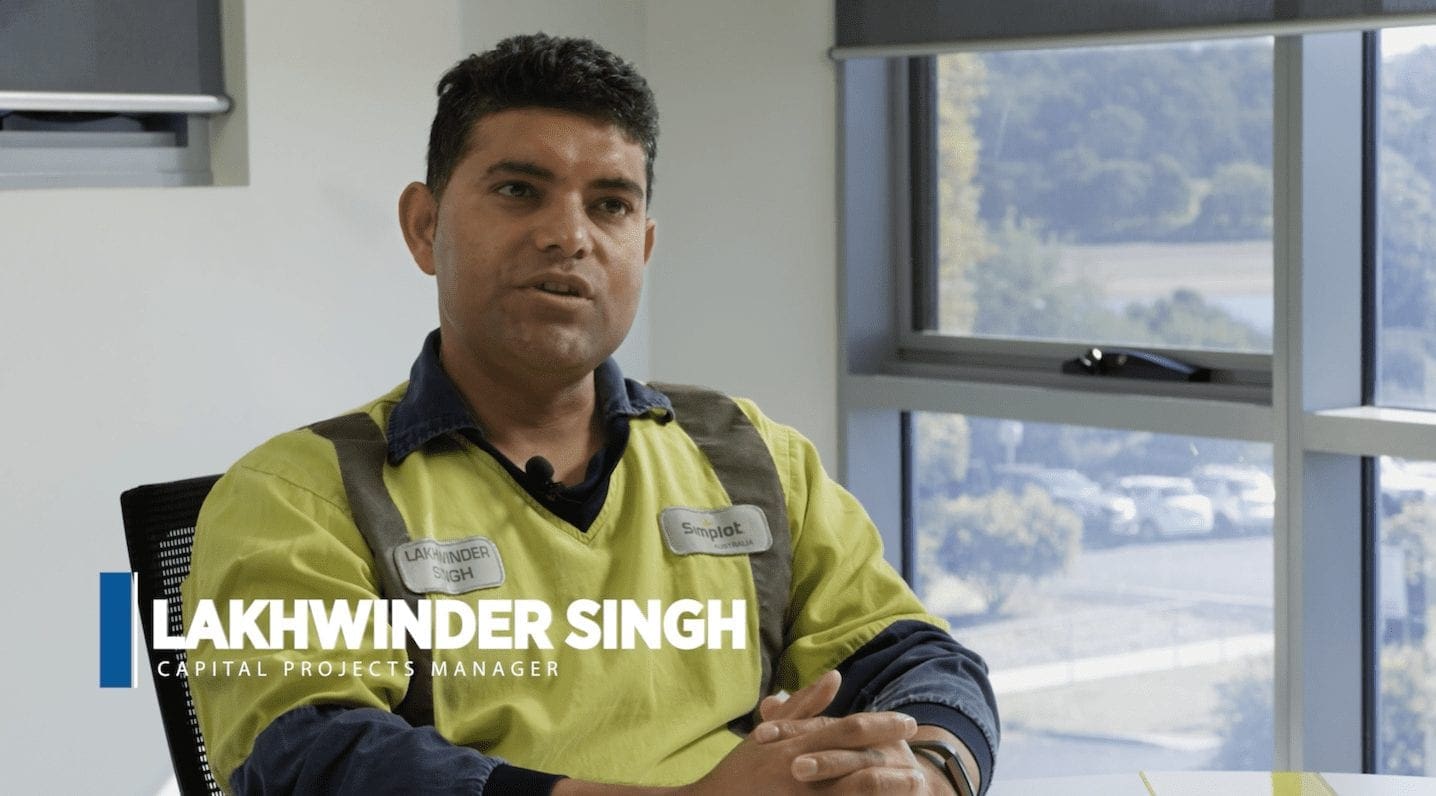
Most corporate videos are filmed in offices, hospitals, factories, schools and other working environments. The setting often helps explain who the people are and what they do.
We look at the direction of the windows, the colour of ceiling lights, the depth behind the speaker and the amount of control available. We may soften a window, turn off part of the room lighting, add a compact fixture to the background or change the camera position.
The aim is to keep the location recognisable while making it work for video. Our location planning helps us identify likely issues before the filming day.
You do not need to clear a whole office. A suitable room, a little setup time and control over nearby noise are often enough for a professional interview.
Daylight can look excellent, but it moves and changes. We decide when to use it, when to soften or supplement it and when our own lights will give us more control.
The same room can look completely different in the morning and afternoon. Timing affects the camera direction and filming order.
We monitor exposure and colour, then use diffusion, flags or added light when conditions are likely to change during a take.
We group angles and actions where possible so a scene does not jump between bright sunlight and a much darker look.
When consistency matters, we create enough of the light ourselves that the shoot is not dependent on perfect weather.
A television commercial, staged scene or studio production may need several lights, diffusion, flags, rigging and a dedicated lighting or grip team. We work that out during pre-production.
The intended mood, camera movement, set and performance tell us what the lighting needs to achieve.
A gaffer, lighting assistant or grip may be added when the scale, rigging or schedule calls for specialist support.
Larger soft sources, stronger lights, overhead diffusion and grip equipment are hired when the shot justifies them.
Once a look is approved, we record and maintain it so coverage, close-ups and repeat takes all belong together.

The lighting package depends on the shots, the location and the control we need over the image.
For regular corporate filming, our compact Aputure and amaran fixtures, small powerful lights and large softboxes give us a professional result with a manageable footprint. They are quick to position and practical in real workplaces.
Live productions, commercials and studio shoots may need more cameras, wider coverage, repeatable lighting across several positions and more crew. We plan the package before the shoot and explain any specialist requirements in the quote.
Our equipment page explains the standard kit and how we scale it for larger jobs.
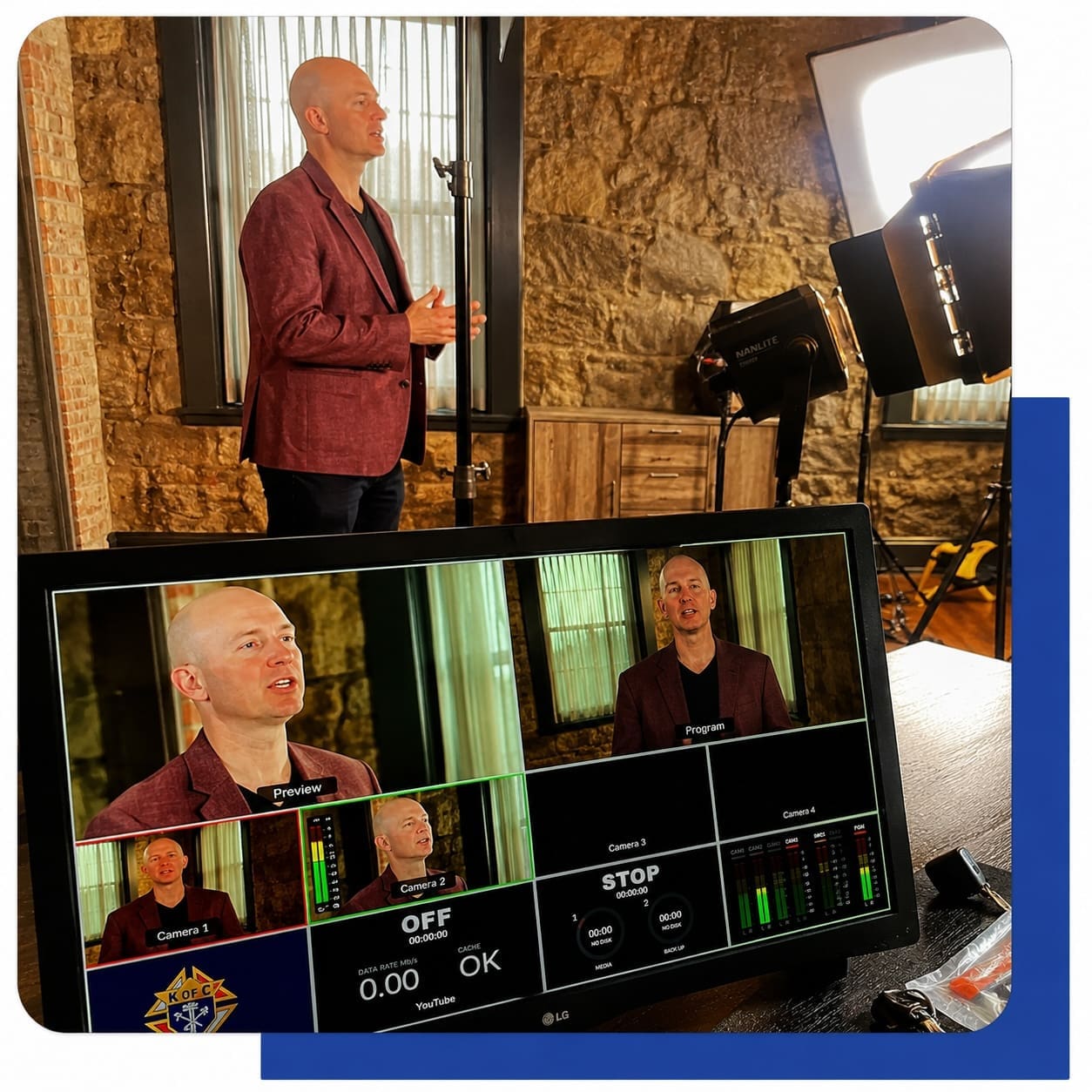
A carefully composed interview usually takes 45 minutes to an hour to light and frame well. A simple setup can be quicker, while several cameras, windows or a more complex background may take longer. We allow for the setup in the filming schedule.
Usually, yes. We use compact, powerful lights for most corporate filming and choose a room that gives us enough depth and control. We explain how much space and setup time we need before the filming day.
No. Three-point lighting is a useful starting point. We choose the actual setup to suit the person’s face, the location, the camera angles and the mood of the video. That includes deciding how much shadow to keep and how the background should feel.
Yes. Natural light can look excellent when it is coming from a useful direction and is likely to stay consistent. We may soften it, balance it with our own fixtures or reduce our reliance on it if the weather is changing.
No. Our regular corporate crew handles the lighting for many interviews and workplace shoots. For television commercials, larger sets, rigging or complex scenes, we may add a gaffer, lighting assistant or grip and include that clearly in the production plan.
Tell us what you have in mind. We can talk through the options, answer your questions and put together a clear quote.
