At a glance
Pre-recorded segments let you review interviews, graphics and sound before they appear in a live stream, and repeat a take if needed. Prepare the script and brand assets before filming, allow time for editing and approval, then test the finished file in the broadcast system for picture, sound and timing.
In this guide
Live streaming video lets businesses share presentations with employees and potential customers in different locations. A programme can combine live speakers with pre-recorded material, giving the production team time to check interviews, graphics and sound before the audience sees them. The key benefit is greater control over the live stream and a reduced risk of technical difficulties. The finished segment can be reviewed in advance, although the playback system and live broadcast connection still need testing.
Rise with SAP approached us to help create pre-recorded video content for their upcoming hybrid event production. This involved working closely with their team to organise a video shoot, incorporate appropriate graphics, and develop a clear vision for the final result.
Pre-production
The Rise with SAP video featured an interview conducted via Zoom. The interviewer was based in Melbourne, while the interviewee was located in Europe. This required extensive pre-production planning. Key preparation tasks included coordinating time zones, working with two separate film crews, and developing a clear interview script.
Pre-production was also critical in meeting a tight deadline. SAP required a speedy turnaround, so we gathered all existing brand assets before filming. This included logos and brand guidelines, allowing the editing process to begin immediately after the shoot.
Production
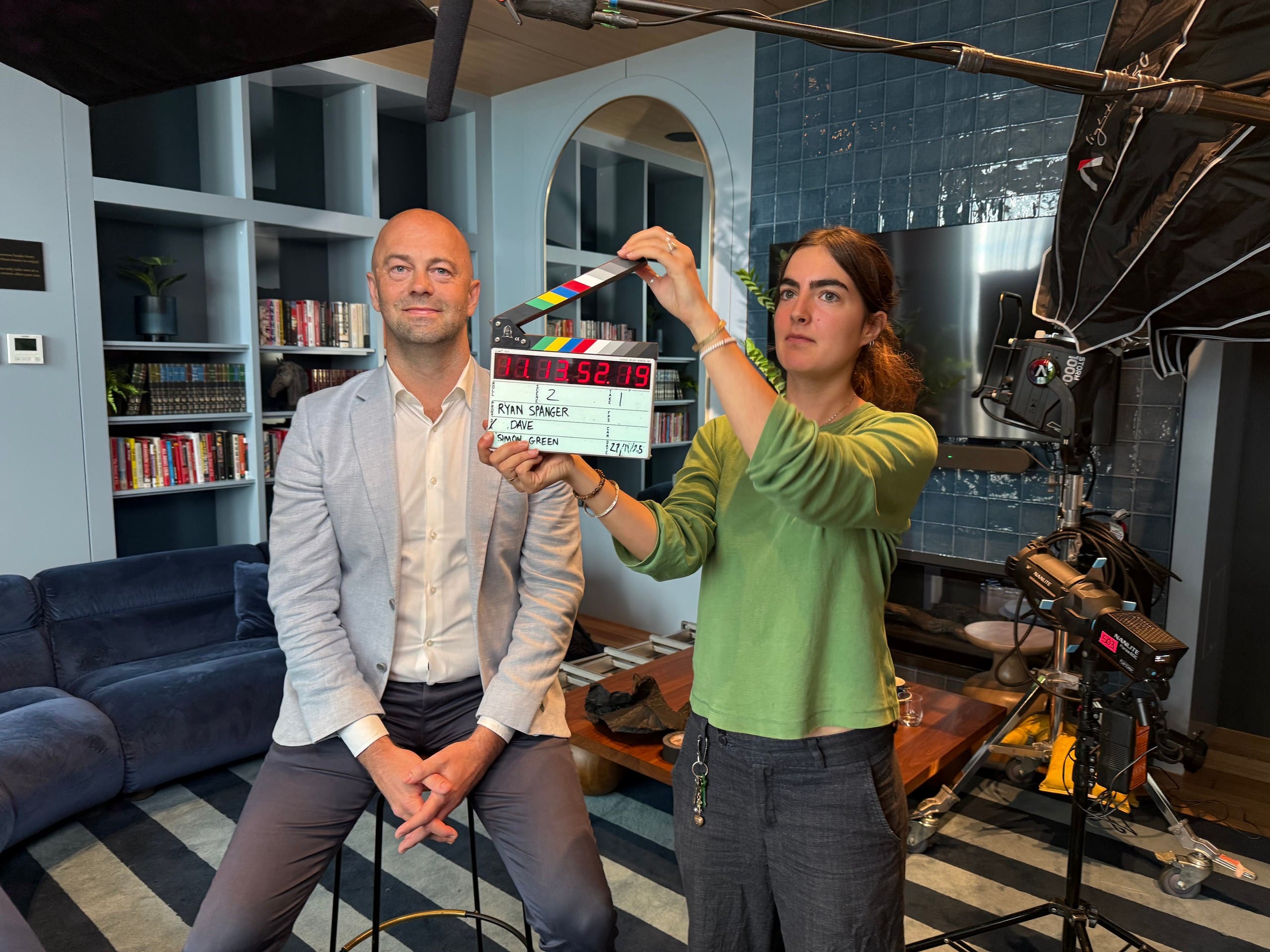
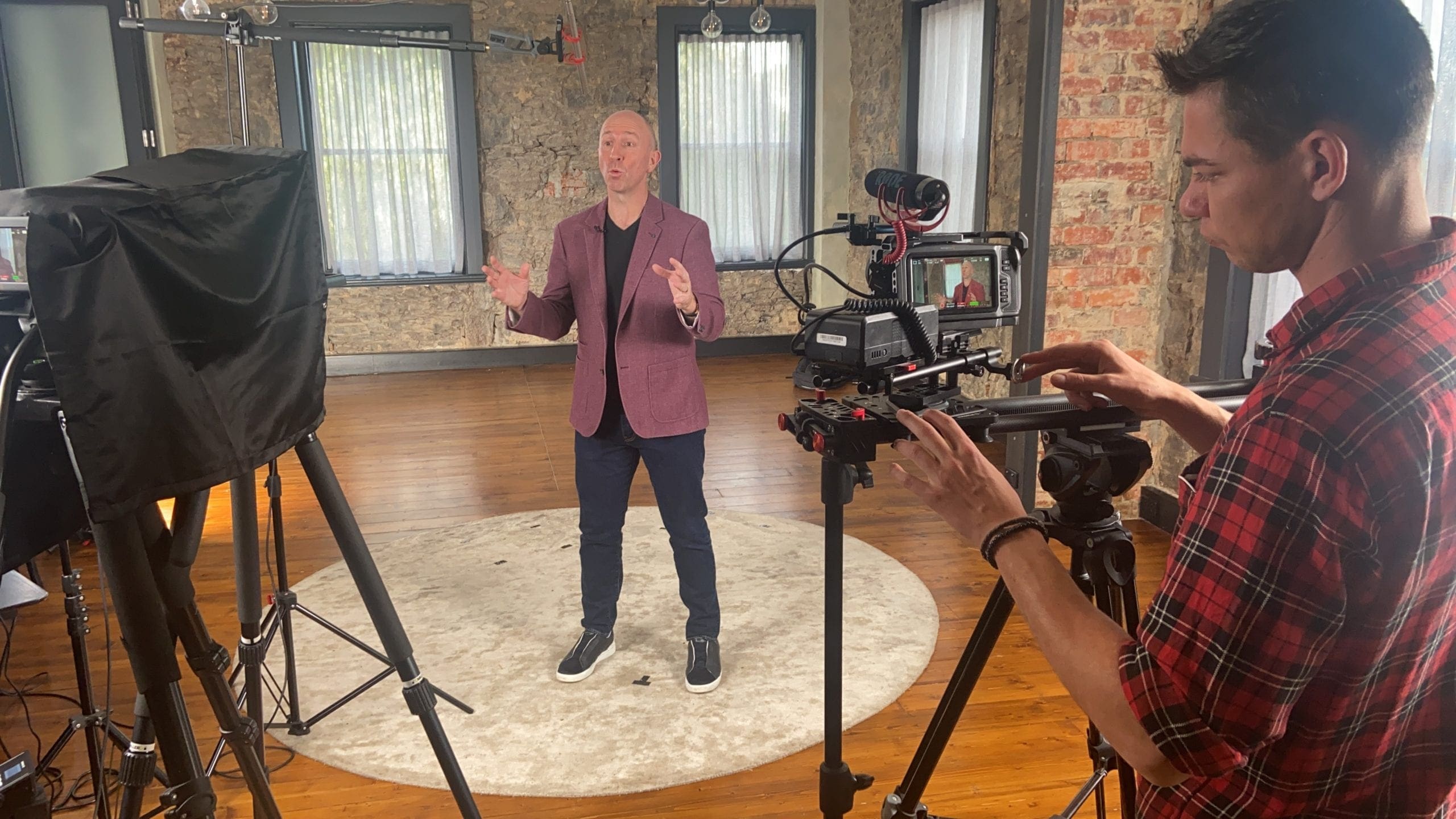
Filming for the Rise with SAP content was completed in a single day. Because of the planning completed beforehand, we were able to capture everything efficiently and stay on schedule. Rather than filming in a studio with a plain background, we selected an event space in Fitzroy. This provided a more visually engaging environment. While street noise presented some audio challenges, the richer setting contributed to a stronger final result.
Throughout the shoot, detailed set notes were taken to make editing easier. Multiple takes were recorded, and the strongest performances were clearly marked. Camera positions were also sketched to speed up and improve the accuracy of multi-camera editing. 
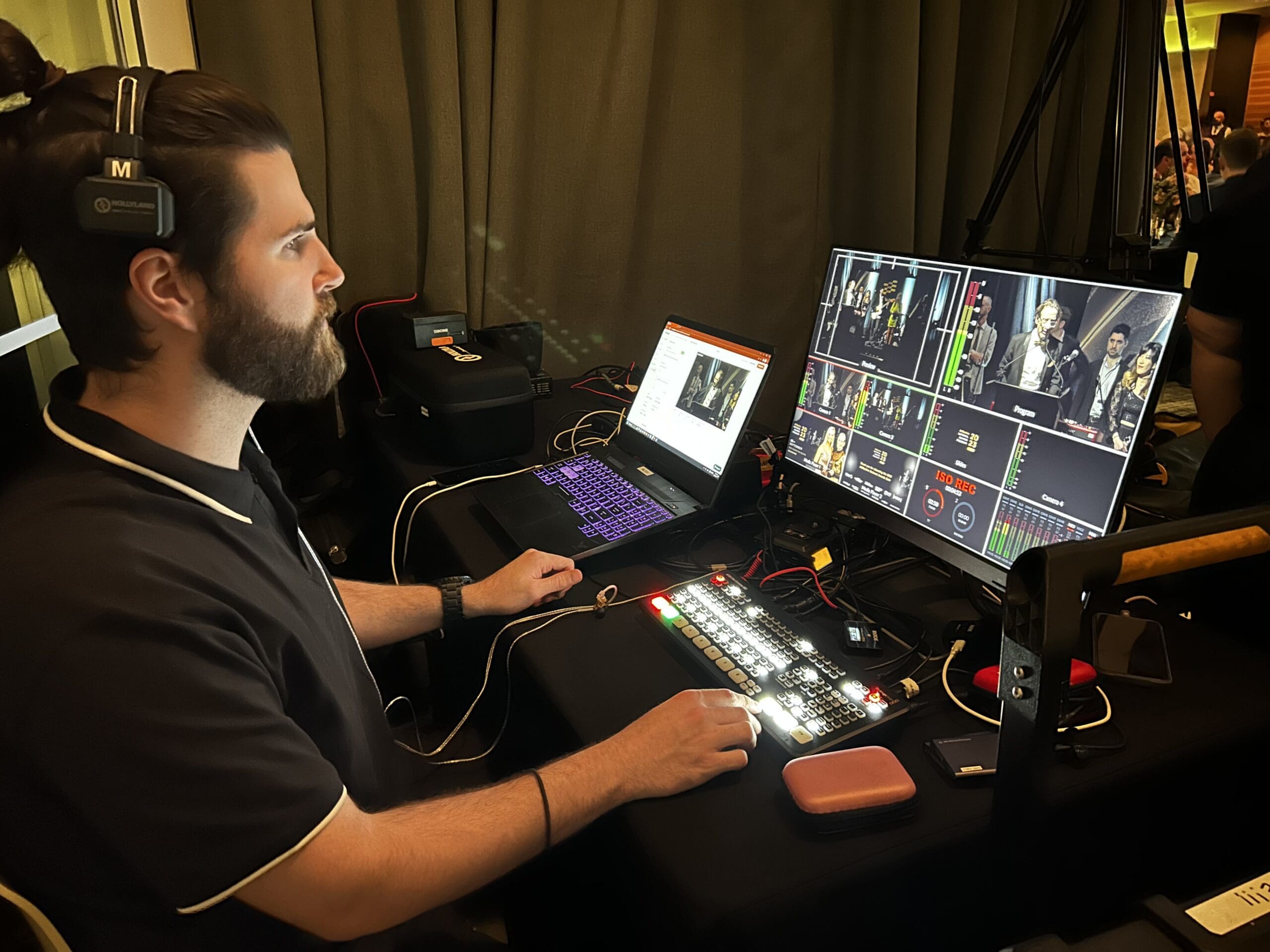
Live stream equipment for interviews
For this pre-recorded interview, we used a Zoom video call to connect the interviewer in Melbourne with the interviewee in Europe. This also allowed the client to observe the shoot remotely and provide instant feedback.
Audio dropouts can interrupt a remote interview. The presenter used a detailed script and autocue to keep the delivery on track, but autocue does not prevent connection problems. Pre-recording gives the crew an opportunity to repeat a line or take if the recording is interrupted.
Pre-recording lets the team check and approve the segment before it is used in the live program. See how this fits into planning a live stream.
Post-production
The editing process was straightforward. A clear script and detailed set notes made post-production efficient, even with a large number of files. Correctly naming and organising footage, assets, and audio was essential.
Once everything was sorted and synced, the edit followed the planned structure closely, allowing the video to come together quickly.

Delivery
To deliver the final video efficiently, we used a secure online file-sharing platform. This allowed the client to view, download, and provide feedback, and to request revisions where needed.
The finished files still need to be loaded into the broadcast system and tested for picture, sound and timing before the event begins.
If you need support with platform selection, audience engagement, technical planning and live event delivery, our team can help. Explore our Live Streaming Melbourne services and see how we help organisations deliver professional online events.
Browse our live streaming planning guides for related advice.
Ryan Spanger is the founder and managing director of Dream Engine, a Melbourne video production company established in 2002. Over the past two decades, he’s produced hundreds of videos for businesses, government departments, universities and healthcare organisations across Australia. Ryan specialises in helping organisations explain complex ideas through clear, engaging video content, with particular experience in corporate communications, training and education.